MONSIEUR BLONDEAU

As the hotel employee said to George Best when he found him in his suite, lying on a bed of banknotes in the arms of a naked Miss World, ‘Where did it all go wrong?’ Perhaps for some, a qualitative deterioration in life began when they first started serving salad with fish and chips. But probably the seeds of our self-destruction were already planted in our ancestors before they even hauled themselves out of the primeval bog and on to dry land. It was the same when their descendants ventured from the green comfort of the Great Rift Valley and trailed north, oblivious of impending climate change. And it was the same when their colonising descendants returned to the Heart of Darkness and to a zoonotic disease that would spread to all four corners of the earth. Shamans will say of our occasional, and ultimately final, tragic destiny ‘it is written’; Higgs and Boson will say it is in our DNA and will be looking for it with microscopes.

For Monsieur Blondeau things started to go spectacularly wrong close to his fortieth birthday in the 1970s. It was at a time when labour-intensive investment was shifting from the old to the new world and, as in many a calamity, it was the wider issue that triggered the personal. It was a time when the satanic mills and coalmines of Europe were being dismantled and abandoned, a time when great and ancient shipyards on the Mediterranean shore, on the Clyde and in Belfast were closing, skeletal cranes marking their graves along the seashores and banks of estuaries. It was a time when riveters of ships’ plates and deep seam miners began to join the list of skilled workers lost to progress, along with the fletchers and coopers, the thatchers and cordwainers. Remnants of the Industrial Revolution, like Ironbridge, and more modern structures like Battersea Power Station, were turned into museums. The only Western European countries attempting to modernise their heavy industries were Russia and its Polish satellite; the rest of Western Europe turned to tourism, printing T-shirts and gambling, or dealing in futures and options as the financial community prefer to call it.

Among the first countries to invest in the steel industry abandoned by Britain, France and Germany were Brazil and Venezuela. Part of that huge investment was spent on the rolling-beam and rotary hearth furnaces supplied by the French engineering company where I was employed, and I found myself travelling back and forth to South America in the process of organising our commercial presence in those countries. The contracts prescribed the establishment of branch offices, limited production and the training and use of local labour. These were long-term contracts requiring the expatriation of scores of French engineers and their families for two or three years. Monsieur Blondeau, a tall, dark draughtsman of few words was one of the first to volunteer. His wife also worked in the company as a secretary and it was agreed that she would accompany him and provide administrative help in the plant and accounting office we were setting up in an industrial estate close to the town of Campinas, some 80 kilometres from Sao Paulo.

As I went back and forth to Brazil I learned more about the Blondeau family. The husband and wife were leaving two daughters, one of whom was married, and a son behind. The son was serving a prison sentence for drug-related offences and the unmarried daughter was in a nursing home suffering from a nervous breakdown. The day before I was to leave on one of my trips to Brazil I was asked to take Monsieur Blondeau’s unmarried daughter with me. It was arranged that a doctor would release the girl into my care at Orly Airport and her parents would be at the airport in Sao Paulo to collect her. And so it was that Blondeau’s daughter, sobbing incessantly throughout the whole trip and soaking the sleeve of my suit jacket, flew into an altogether new and more hideous nightmare.

The day before I was due to return to Paris, I found the Blondeau family reunited, happy and smiling by the pool at the country club. Their reunion was tragically brief. One month later Monsieur Blondeau was driving his wife home from a restaurant along one of Brazil’s many pitted and unlit highways when he ran full pelt into the back of an unlit, stationary truck. Wooden planks, protruding beyond the tail-board, sliced through the car’s windscreen, decapitating Madame Blondeau. Her husband was unhurt. Within days he was back in the office with his usual placid smile as if nothing had happened.

Shortly after the death of Madame Blondeau I was sent to Brazil on a more permanent basis. Complications caused by an inflation rate of 10% per month, the resignation of the local General Manager and delays in the Brazilian Government’s payment schedule had forced French management to reinforce its team in Brazil.
Three of us set out, P-J to be General Manager, EM to beef up the engineering side and myself as CFO to risk sending the whole operation into bankruptcy. We had only been in Brazil for a short time when we learned that the recently bereaved Monsieur Blondeau was living with one of the Brazilian secretaries we had employed locally. A sensuous black girl from Bahia, she was half Blondeau’s age, attractive, ambitious and self-confident to the point of insolence. Within months she had fallen out with Blondeau’s daughter and driven her out of the home.

The Mayor of the quiet and prosperous town of Campinas, where Blondeau, his daughter and girlfriend lived, had decreed that no bars, brothels or gambling were to be allowed within the city’s precincts. All of these forms of entertainment were contained in a special enclosed area outside of town near the international airport. This red-light city, ringed by a barbed-wire fence with a permanent police presence at the sole point of entry, was known as the “Zona” and it was here that Monsieur Blondeau’s rejected daughter went to live and to earn her living as a prostitute. There was no way out of the Zona. Her neighbours were all brothel madams, drug-dealers, pimps and fellow whores. Soon pregnant and later the mother of a baby boy, she left the Zona only long enough to deposit her son into the care of her father and his Bahian mistress. Strangely, the added distress of his daughter’s circumstances did nothing to remove Monsieur Blondeau’s permanent grin of contented complacency.

Like all the expatriates, Monsieur Blondeau was entitled to an annual trip back to France for himself and partner. And so it was that I approved the purchase of two return tickets from Sao Paulo to Paris via Rome. On the day of Blondeau’s departure, even as his plane lifted into the evening sky over the Zona, I took a call from someone wishing to talk to the departing Frenchman. The caller identified herself as Blondeau’s elder, married daughter. Incoherent in her misery, I was unable to understand her problem and could only tell her that her father would be in Rome in 12 hours time and in Paris 2 days later. Blondeau arrived in Paris to the news that his daughter had been killed in a domestic fight on the evening I had taken her call. Some weeks later he reported back for work. There was no outside sign that the latest tragic event in his life had upset his normal cheerful composure.

With his wife and eldest daughter dead, his son in prison, his younger daughter a prostitute and his mistress the sulky ward of his daughter’s illegitimate child, there seemed nowhere to go but up. But fate and the company President had other ideas. And so it was, on the President’s next visit to Brazil, that Monsieur Blondeau was fired. Electing to remain in Brazil, he bought a nail-making machine with his redundancy package, grew a big black beard and settled down in a shanty suburb of Campinas with his grandson and his black mistress.

The ancient Greeks believed that on the third night after a child’s birth the Moirai (the Three Sisters of Destiny) would decide the course of the child’s life. Clotho would spin the thread of life, Lachesis would tailor it and Atropos would decide when the thread would be cut and life ended. Perhaps Monsieur Blondeau’s composure in the face of tragedy lay in accepting the destiny the Sisters had designed for him. Or perhaps Tyche, daughter of Aphrodite and Hermes and Goddess of Luck, played a part, because I’m not sure, even now, whether Monsieur Blondeau was the luckiest or the unluckiest man I ever knew. Perhaps to endure those disasters and to end up self-employed in the dreamy tropics with a young Bahian mistress was more than he could ever dream of.


George Best: Gloriously talented Manchester United and Northern Ireland footballer who self destructed in 2005 at the age of 59. ‘I spent a lot of money on booze, birds and fast cars; the rest I just squandered.’

WHAT WOULD I DO WITHOUT ME?

“I don’t believe in an afterlife but I’m taking a clean change of underwear just in case.”
Woody Allen

At 9am on September 11th 2001 my cousin Keith and I were sitting in his shop in the East End of London watching the attack on the World Trade Centre on a portable TV. Together we saw the smoke pouring from the North Tower, listened to the hesitant commentary as the reporter tried to explain something that he himself didn’t understand. And then there was the dot in the sky that disappeared into the second tower in a silent puff of smoke, the unsteady images from hand-held cameras, people running from the tsunami of dust and paper that swept down the streets as the towers sank to their knees in defeat. Even now, thirteen years later, after the whole tragedy has been dissected, re-enacted on film, analysed and grieved over, even now that I have seen for myself the bleak cavity of Ground Zero, the overwhelming shock remains at this pure manifestation of evil which somehow became personified in the wall-eyed expression of Muhammed Atta. This meticulously planned and religiously inspired attack provoked an invasion of Iraq, fortified the radical Christian Right and brought forth, 6 years after the event, a trio of books from Christopher Hitchens, Michel Onfray and Richard Dawkins that made me think.

We were not a family of church-goers; religion, along with politics, sex and anything that required exposure of feelings, was never discussed. In fact, I don’t remember a single thing my father ever said to me; no repeated piece of advice that might have shaped a boy’s future. I have the impression his life stopped sometime before I was born, perhaps when he laid down his cherrywood pipe and started smoking cigarettes. I realize now that I was a smoker at the age of four, inhaling the smoke from the 60 un-tipped cigarettes he smoked each day. Photographs of him sitting alert and arms akimbo as a member of Alleyns Soccer Eleven of 1921 or smiling with his Pioneer Corps unit in Egypt in 1944 suggest that I had two fathers. The man I knew seemed to be always on a ladder painting drain pipes or sitting cross-legged on a lawn removing weeds with a chisel. He may be in his Parker Knoll watching Morecombe and Wise on our Radio Rentals TV with its detachable legs or reading the Daily Express over a cooked breakfast. Perhaps he’s shoveling salt into a water-softener or in his attic darkroom, developing undistinguished black and white prints. Even if he stood before you, dragging deeply on a Capstan Full Strength, he was somewhere else, probably in the smoky, hop-scented saloon bar of the Heaton Arms; let’s not mistake him for a deep thinker.

Mum had more to say. She’d sit and talk over cups of PG Tips with Mrs Smith who came once a week to polish the silver tea service on the sideboard and the brass frogs and bells and Spanish grandees that sat in niches in the brickwork around the fireplaces. While I collected newts from the village pond, she’d chatter away with her friend Sheck who managed an antique shop in Chislehurst. She talked to me too, often about a past that sounded more fun than the present. Along with an introduction to guilt she also offered endless warnings, “You can stoop low and pick up nothing” (a veiled reference to my father), “Chew it properly” and “Look both ways” still reverberate down the dark tunnels of my un-sleep.

“Mundania is a very drear place where the people do not believe in magic.”
Review of “The Man from Mundania” by Piers Anthony

Our house in Mundania Road, Honor Oak, was in a quiet grid of streets named after places in the Crimea, part of a 1930s development of gravel-walled semis. Beyond us was a series of gloomy, late Victorian houses and then, on the corner of Forest Hill, a dilapidated block of white, art-deco apartments opposite a church. I can still recall the smell of sun-warmed creosote on fence palings, of dock and nettle and privet; the oily fumes of combusted fuel from London Routemasters; the savoury steam from Sunday roasts and poached haddock; the aroma of newsprint and confectionery, of polished linoleum and most of all, of damp, that awful damp that pervades the inseparable boroughs of Camberwell and Peckham, Lewisham and New Cross, Deptford and Penge. I also remember the first thrills of escape, of slipping through a gap in the fence at the bottom of the garden to roam the wide open spaces of the playing fields that backed on to our row of houses, the lone visits to my Uncle and Aunt’s house around the corner in Therapia Road and scaling the wall of the underground reservoir in Homesdale Road to search for cartridge cases.(1)

On weekdays my father would drive his old cream and blue Sunbeam down to 190 Rye Lane where he would slowly destroy the timber merchant business his father had begun and built up. My grandfather had taken advantage of the canal built in the 1820s for the transport of softwoods from Surrey Commercial Docks to New Cross to set up a saw-mill on its banks and a retail outlet in Peckham. He called it “W Lynn and Sons” for he had expected both his sons to continue the business but my father’s younger brother, Ted was rounded up by the Japanese when they took Singapore in February of 1942, and after a spell in Changi, died in January of 1943 helping build the infamous Burma Railway. (2) Would things have turned out differently if he had been there? Who knows? There were further complications when grandma died (3) and was replaced by her husband’s house-keeper, Constance, a humourless, dessicated prune of a woman with illusions of Gran’dad.

It is easy to see now the strategic options that would have been open at the time to someone interested in developing or even merely saving the business. But my father was not interested. The body language, the resigned attitude, the constant resort to the temporarily uplifting saloon bar of the pub across the Rye told it all. Often, on a Saturday, my mother would help with the bookkeeping and I would be taken along to play on the piles of timber or in the heaps of sawdust in the old stables that was sold as bedding and toilets for rabbits. I could also escape into Rye Lane, in the 1950s still a bustling shopping centre with its fruit and vegetable stalls in Choumert Road, Austins Antiques warehouse, the Tower cinema, the stall under the railway arches selling cigarette cards and the confusing labyrinth of Jones & Higgins, at one time the largest department store in South London. How my father coped with the final collapse I cannot imagine. “He aimed low and missed,” explained my mother some years later.

In the early 50s we left Forest Hill and moved a dozen or so miles south to Petts Wood, a garden estate of Tudorbethan style houses surrounded by woods of oak and silver birch. To create a village atmosphere the developer had grouped the shops in a square surrounding a mock Tudor pub called the Daylight Inn named in commemoration of William Willet, the inventor of daylight saving, who had lived most of his life in nearby Chislehurst. The owner of the Dunstonian Garage, a dealer in Hillman and Humber cars, had even been persuaded to cover his petrol pumps with a canopy and to incorporate oak beams into the façade of his workshop and office. Slightly out of keeping was the local church, St Francis, set in woodland and built of wood and Sussex brick, its long straight hammerbeam roof recalling a medieval tithe barn. Our own house at 17 The Chenies (4) was all white with leaded-light windows and an elaborate porch and oak front door with gothic panels. There was a crop of silver birches in the front garden and a pond with water lilies and frogs in the back. Although there was a nice lounge with inglenook fireplace and a view of the garden with its screen of pine trees at the far end we lived grouped around the television in the dining room or in the kitchen.

In this paradise of “rus in urbe” I watched relations between my parents deteriorate. Apart from my father’s lack-lustre performance in the work-place and his heavy drinking my mother confided to me that he also had a “weakness for women” and enrolled me as her private investigator. Children, in both fact and fiction, have always been used for nefarious ends by their elders. The experience of young Leo Colston in L P Hartley’s novel “The Go-between” left him psychologically impaired for life. How will those 8 and 10 year old Junior Streetwatchers (embryo Stasi agents?) employed by Ealing Council (5) to identify and report on enviro-crime issues (graffiti and fly-tipping) fare as adults? My duties were to search the ashtray of dad’s car for lipstick stained cigarette ends when he came home late and to make sure he was never left alone with unattached or unaccompanied women. On at least one occasion I was sent out to call my mother from a public ‘phone box, a supposedly mysterious admirer designed to provoke my father’s jealousy. I doubt whether the plan worked. When on occasion I became the subject of discussion between my parents I was never referred to by name but as “that boy” (even if I was within earshot) as in “That boy needs a new pair of shoes” or “Don’t you dare hit that boy, Arthur”. Like all children I didn’t like to hear my parents arguing and I would creep from bed to listen to what my mother would later, in comforting me, describe as “just a discussion”. Was my father joking when he announced, in response to my mother’s threat that she would dance on his grave when he was dead, that he would be buried at sea?

My sister, ten years older than me, was already planning her escape into matrimony; my escape for the moment was into the branches of the pine trees at the end of the garden, among the books that lined the shelves over my bed or into the Embassy, Petts Wood’s art deco cinema on the other side of the railway line that divided the town both territorially and socially. On those evenings the family went to the cinema we were greeted in the foyer by the manager, Mr Helstine, resplendent in evening suit. There was chop, chips and peas in the first floor café lounge with its fashionable tubular chairs before we settled into the rose and gold auditorium for a full evening of cinema – Movietone News, cartoon and a double bill of A and B films, spoilt only by my mother fidgeting and grumbling about the “stupid slobbering” when the actors happened to embrace. Better still when I could travel alone to the kids only sessions on a Saturday morning and follow the adventures of Johnny Weismuller, Buster Crabbe and Hopalong Cassidy. Cinema was not the only casualty when the Embassy closed its doors in 1973; the building’s new tenant, Safeway’s, spelt death for many of the local butchers, fishmongers and fruit and vegetable shops. A regrettable loss was David Grieg, a meat and dairy shop in Station Square where assistants in long aprons would cut your order for butter from a pale yellow mountain with cheese-wire and then slap it around between wooden paddles before packaging it in grease-proof paper.

My sister’s marriage to her Dutch boyfriend, in St Francis church (with reception at the Daylight Inn) did not result in her immediate liberation. For the first year or so of their marriage she and her husband lived with us in The Chenies. This is not an easy situation in the best of circumstances and it must have been a happy day for her when she and her husband moved into their own home some five miles distant on the other side of Orpington. After my sister left, my mother moved into her own bedroom (newly and un-tastefully decorated in pale grey Formica) while my father slept on in his cold room with its heavy mahogany veneered furniture and smell of stale cigarettes until he decided to move full-time into the Heaton Arms. ‘He was called to the bar,’ explained my mother.

“I am constantly going into churches, but for architectural reasons; and, more widely, to get a sense of what Englishness once was.”
Julian Barnes
“Nothing to be Frightened of”

If religion was never discussed and we were not church-goers there was also no sign that either of my parents were private believers. Grace was not said at meals; there were no framed prints of Saints on the walls as there were at my mother’s sister’s house. God’s name was only called upon in contexts of blasphemy. In spite of all this I still have a fading card that says on April 5 1942 at St Augustine’s Church in Honor Oak Park I was made a Member of Christ, A Child of God and An Inheritor of the Kingdom of Heaven but it was not until I was packed off to boarding school for nearly eight years that I was fully exposed to religion or, more accurately, to the Boys Own Anglican version of Christianity. At Dulwich College Prep there were prayers and hymns morning and evening and, on Sundays we were shepherded in a crocodile up College Road, past the toll-gate and into St Stephens for morning service. (6) At Cranleigh School there was chapel each morning and every evening we would kneel on the bare boards of the dormitories for prayers before bedtime. On Sundays there was Evensong as well as morning chapel when some visiting cleric would deliver a sermon to a largely uninterested congregation. I enjoyed chapel, listening to future organ scholars playing “Jesu Joy of Man’s Desiring”, sun illuminating stained glass, gripping the wings of a brass eagle as I read the lesson from a massive Bible and the carols at Christmas. I was a good divinity student and passed it at GCE. I still take great pleasure in the language of the King James’ Bible, in Donne’s sermons and the poems of George Herbert. At fifteen I was confirmed by the Bishop of Guildford, kneeling on the black and white marble tiles hoping for, but not expecting, some magical revelation as I received the sacraments.

But I never believed. My lack of belief was instinctive not something I thought about or intellectualized over; certainly I never had Christopher Hitchens’ self belief or intelligence as a schoolboy to voice my rejection of religion in general. I knew then that Genesis was a fairy tale and still find it amazing that there are educated people who believe the earth is 10,000 years old. I could never accept Jesus’ divinity or any New Testament tales of the super-natural; after all, what was the so-called miracle of the five loaves and two fishes other than an equitable redistribution of pooled assets, the burning bush other than a natural phenomenon. Faith was required and I had none. Why would anyone place faith in something that for two thousand years had never provided a single instance of justification? Judging from history those who had faith were seldom rewarded in this life and as far as I was concerned there was no other. And isn’t it strange how contemporary Greek Othodox ritual seems as alien to an Anglican as Sumerian Sun worship, that Sunnis and Shiites slaughter each other over interpretation of some arcane procedures of the same religion and that educated men like Latimer and Ridley were toasted for their intransigence by the separate branch of a common Christian faith. And wouldn’t the faithful Christian be a loyal Muslim if he had been born in Islamabad rather than Ipswich? And so, looking back, I can see Bible study was just another part of the broader study of history in general and history, or a large part of it, the struggles of one religious sect against another. Hitchens and Dawkins and Onfray were only making me feel more comfortable with something I had always felt. The love of churches and cathedrals, of Christian ritual at the time of birth and marriage and death remain as mere memories of England and Englishness and not objects of guilt over lack of faith.

I wonder what my father thought of in those post-stroke years, in bed alone or silent in his slippers in front of the television as my mother discussed him within earshot with visitors. Did religion or the possibility of afterlife ever cross his mind? We’ll never know.
He finally gave up at 75. Weakened and emasculated by a stroke, deprived of tobacco, strong drink and the ear of a friendly barmaid, he sat quietly watching the sport, mother clicking her dentures while he wobbled a lower front tooth until he could pluck it from his gum and start on the next. He was buried in a postcard country churchyard, four men in black carrying him through the yew trees to be lowered into the earth. Somehow this was a betrayal. He wasn’t meant to be there alone in a churchyard next to a church he had never visited in a village he had never known. Better his ashes in an urn, flanked by bottles of Bells and Teachers, on a shelf behind the saloon bar of the Heaton Arms. At least, reduced to dust, he could have been himself. Mother chose not to attend the funeral although she removed Dad’s signet ring and wore it to her own. In a final act of misandry when her time came she elected to be consigned to the flames and her ashes scattered in a Garden of Peace rather than bear the eternal proximity of her husband. Presumably, among her powdered remains are flecks of my father’s gold signet ring.

Mother had longer to reflect on past life and after-life in her retirement home bed-sit in a large Victorian house on the outskirts of Maidstone smelling faintly of stale pee and cabbage. Too proud to mix with the other inmates, she must have watched those last seasons come and go alone, writing out shopping lists – Jay cloths, shortbread biscuits, note paper – to hand my sister when she came to visit, cutting unwanted faces from photographs of the past, re-writing history in her head. On my own infrequent visits we had nothing much to say to each other. On one occasion, jet-lagged from a 24 hour flight and overcome by the heat in the tiny room, I passed out on the bed and was unconscious for two and a half hours out of the three I had allowed for the visit. And so, as the years ticked by it sometimes seemed as if she would go on forever. Even though choked with the horrible finality of it all when she was finally swallowed in the inferno, I experienced a mild feeling of release afterwards as I joined the mourners for tea in my sister’s garden and when Keith and I later sped off towards London I felt quite happy it was all over.

(1) The biggest underground reservoir in London. Used as a rifle range during WW2; now a golf course
(2) Signalman 2357597 Thomas Edward Lynn, Royal Corps of Signals. Born March 1907; died January 2nd 1943. He is buried in Kanchanaburi War Cemetery, located 129 kms WNW of Bangkok and close to the famous Bridge 277 over the Khwae Yai River, which was completed one month after Signalman Lynn’s death.
(3) Grandma Alice died at the age of 62 in 1934. She was 6 years older than her husband.
(4) The Chenies, a cul de sac of 29 houses, was designated a Conservation Area of architectural and historic importance in 1982
(5) Article in the Weekly Telegraph 10th September 2008
(6) Both St Stephens and Dulwich College were the subjects of paintings by Camille Pisarro who had fled France in 1870 on the outbreak of the Franco-Prussian war to live with his half-sister in Palace Road, Upper Norwood.

AT HIS COUNTRY’S CALL

On the idle hill of summer,
Sleepy with the flow of streams,
Far I hear the steady drummer
Drumming like a noise in dreams.

Far and near and low and louder
On the roads of earth go by,
Dear to friends and food for powder,
Soldiers marching, all to die.

A E Houseman

It’s a sad fact that some questions that should have been asked only take form after the responses are no longer available. Answers to questions I would like to pose now were mine for the asking a long time ago, but lack of curiosity at the moment leads to the lonely vigil of later research. I suppose it should not be surprising that the facts provided by research often fly in the face of the memorized version handed down; after all, one has to allow for the passage of time since the event was witnessed or heard as well as for the long and general tradition of embellishing legend. It was entirely understandable therefore that I was unable to substantiate much of our family’s history passed down by way of mouth. I have been unable to locate among my ancestors a sea captain, although I did find that Able Seaman Stephen Mayne(1) was aboard the Neptune, anchored off Beachy Head when the census for 1861 was taken. I could find no evidence to support my mother’s claims that my maternal grandfather was part-owner of a restaurant in the City of London or that we were somehow associated with the Delaware-Morgans, purported grandees of Belgravia. However, I did substantiate one story my mother used to tell and that concerned the death of her uncle Harry.

Harry, she would tell me, died at the battle of Polygon Wood and this fact alone secured my interest as, from an early age, the Great War had held me spellbound. The roots of this interest lay on the shelves of my bedroom and in a black trunk that sat underneath the window. Among other treasures, the trunk contained a History of the Great War collected by my father in monthly installments in the 1930s and therefore available to be inspected piecemeal each night by torchlight under the blankets. On the shelves, among my sister’s hand-me-downs and my own books were some my father had when he was young and among those a novel of the Great War called “At His Country’s Call” by Albert Lee. Having long ago lost the original, I recently purchased a copy and was able to relive the adventures of Maurice Millard on the Western Front. My new copy is inscribed to Sidney Barron for good behaviour in Church.

Later there were to be more serious books about the Great War – “Goodbye to all That”, “Memoirs of an Infantry Officer”, “All Quiet on the Western Front” and more recently Pat Barker’s “Regeneration” trilogy and Sebastian Faulks’ “Birdsong”. My knowledge of the Great War is therefore remembered more through these novels as well as through the poetry of Wilfred Owens and Siegfried Sassoon than through familiarity with its actual history. Those who watched Captain Blackadder will forever remember the war effort as an attempt to inch Army Chief Douglas Haigh’s cocktail cabinet a little nearer to Berlin. And who can forget the casualty statistics, posted up cheerfully as cricket scores, in Joan Littlewood’s 1963 stage musical “Oh, What a Lovely War”?

It was not until the early 1970s, when I was living in Paris, that I was able to make closer contact with the realities of the Great War. By chance one of my first audit clients was situated close to Armentieres (motto: “Pauvre mais fiere”(2)) a town everyone still remembers through the song, “Madameoiselle from Armentieres”. Originally “Madameoiselle from Bar le Duc”, a French army song of the 1830s resurrected during the war of 1870, it recounted the indiscretions of an innkeeper’s daughter with two German soldiers. It was adapted by British and Canadian soldiers in the early months of the Great War and was still popular in 1940 when Flanagan and Allen used the song as the title of their West End show.

My attention to the ancient killing fields was also drawn by Larry and Bonnie Orsini who had pitched their weekend caravan in a field near Vic sur Aisne. One weekend Larry and I combed through the caves at nearby Confrecourt, where stone quarries had been extended in the Great War to provide subterranean barracks for the French army.

In the early 1970s, stalls at the flea markets at Clignancourt and Bercy were still filled with fading sepia photographs of Poilus and Zouaves, rusting bayonets and lighters and ashtrays constructed from shell casings. Feeling about the war still remained strong, so much so that Stanley Kramer’s 1957 anti-war film “Paths of Glory” depicting the mutinies in the French army after the failed 1917 offensive under General Nivelle, was banned from French cinemas until 1975.

Finally, in 1972, I took a few days leave and went to find Uncle Harry. You don’t have to drive far out of Paris to encounter the battlefields of the Great War. In September of 1914 the Germans had pushed as far as the village of Claye Souilly, a mere taxi ride from Paris and it was in fact 600 taxi cabs, each carrying 5 soldier passengers and their weapons, that transported the Army of Paris to halt the German advance at the First Battle of the Marne. In June of 1918 the Germans were back, this time only 56 miles from Paris. But these actions were in the West and I was travelling North, through Senlis and Compiegne, through St Quentin and Cambrai, headed for Ypres.

My destination was the cemetery at Polygon Wood but I was in no hurry and meandered through Flanders, stopping for bed and breakfast, lingering over the Memorial Park at Beaumont Hamel with its beds of yellow St John’s Wort and magnificent statue of a caribou both in remembrance of the sacrifice made by the Newfoundland Regiment on July 1st 1916(3). The whole of Flanders has a seductive melancholy to it, from the raw brick hamlets to the rows of sodden beet, from the multitude of grim memorials to the songs of Jacques Brel. In the late afternoon of my second day, I arrived at Polygon Wood cemetery. Situated 8 kilometers east of Ypres, it was a beautifully manicured walled garden of green and white. I felt I was going into church as I lifted the latch on the gate and moved amongst the hundred or so graves. Harry was nowhere to be found. His name was not in the register kept in the gate so I walked to the nearby Buttes New British cemetery but Harry’s was not among the 2,109 graves. But on the way to Ypres, where I had decided to spend the night, I stopped to inspect the Menin Gate and there, inscribed on the walls among the 54,896 names of Commonwealth soldiers whose bodies had never been found, was Sergeant Harold Mayne of the 7th Battalion of the Lincolnshire Regiment.

I went back to the Menin Gate, this time in the evening to hear the Last Post played, as it still is, every night. The next day after a visit to the museum I returned home. It was not until thirty years later that I realized I still had not found the right Harry Mayne.

The Harry Mayne my mother talked about was 27 when he took the King’s shilling from the Recruiting Sergeant of the 9th County of London Regiment, Queen Victoria’s Rifles(4), at 56 Davies Street, Mayfair(5). The 1st Battalion was at full complement within 48 hours of war being declared on 4 August 1914 and the 2nd Battalion, to which Harry was assigned, only days later. For the first two weeks the 1,065 men of the 2nd Battalion assembled and were kitted out at Davies Street and then divided, according to social rules of the time, into 3 groups: Public School men, civilians with no knowledge of soldiering and men who had previously served with the 1st Battalion. Harry, a warehouseman, would have belonged to the second group. In the next weeks there was drilling in Richmond and other suburban London parks and, when leave was available, Harry would have been able to see his family at 10 May Place, Peckham(6). On 23rd November the 2/9th set out for St John’s Hill Camp near Crowborough where it underwent strenuous training until the spring of 1915. According to regimental records, the people of Crowborough “set apart recreation rooms for them, allowed them the use of their bathrooms and in a hundred and one ways showed their gratitude to the boys who had come forth to fight in defence of King and country.”(7) Ninety years later, the Station Commander of RAF Wittering would ban Air Force personnel from wearing their uniforms in the town of Peterborough following abuse by sections of the community, while students at University College, London would refuse the military permission to set up recruitment stalls on the College campus.

Among constant but unfulfilled hopes of active service, from the spring of 1915 the 2/9th QVRs marched from Ipswich to Bromeswell Heath, near Woodbridge, back to Ipswich where they stayed in billets until Easter of 1916 and then back again to live under canvas at Bromeswell Heath. Home guard duties were not what the men had hoped for and their marching song, to the tune of “Onward Christian Soldiers” is full of bitter disappointment.

Onward, Queen Victorias
Guarding the railway line
Is this foreign service?
Ain’t it jolly fine?
No we’re not downhearted
Won’t the Huns be sick?
When they meet us over there,
All looking span and spick,
Hope on, Queen Victorias,
Don’t forget the fray,
We shall do our duty
For a bob a day.    

Perhaps they were singing this as they later marched to the coast at Alderton on the Suffolk coast, placing outposts in the same Martello towers that were built during the Napoleonic Wars to repel an invasion by Britain’s current allies. One company, according to the CSM, “put barbed wire between the breakwaters, but was careful not to interfere with the bathing parades.” A company commander gave orders to dig trenches in the sea wall, but next day the local authorities objected and the holes had to be filled in again. In July the brigade was moved to hutments at Longbridge Deverill on Salisbury Plain where it completed its musketry course and waited… and waited. Finally, on Saturday 3rd February 1917 Harry and his mates embarked on the SS La Margarita, and with “smooth sea and a lovely moonlight night” crossed the Channel under an escort of two destroyers disembarking at Le Havre in the early hours of Sunday morning. It was not a warm welcome with 25 degrees of frost freezing the bolts in the soldiers’ rifles. The men were also dismayed to witness the long lines of wounded being transferred from Red Cross train to hospital ship as they assembled on the dockside and set off, in marching order, for the rest camp some five miles distant. On 7th February the battalion was moved in a north-easterly direction by rail through Abbeville to Auxi Le Chateau and then marched 17 miles due west to Sus St Leger where they were billeted in barns to their first sound of gunfire. There was now a week of comparative ease, the men sleeping on straw and enjoying warm meals of mutton stew and boiled chestnuts and the occasional comforting Woodbine before, on February 13th, they were bussed to within 4 or 5 miles of the trenches in front of Berles-au-Bois and Bienvillers, which they were to occupy with two battalions of the Staffords. It was bitterly cold with 3 inches of snow on the ground and the men were made to rub whale oil into their feet before marching the last few miles to the trenches. After six relatively quiet days in the line the battalion marched to Grenas. The snow had melted and the rain set in so the men slogged along in a sea of mud. Apart from a rest from the trenches, Grenas also provided the men with their first bath since arriving in France. Over the next weeks Harry and his mates marched to Gaudiempre to Baillement to Wailly until on March 1st they occupied trenches opposite Blairville, relieving the 1/5 West Riding Regiment and suffered their first casualties.

On March 16th the German army began a strategic withdrawal and the QVRs occupied the enemy line enjoying the superior comforts of the enemy’s trenches, which were 15 feet deep, paved and drained. At the end of March they were at Agny near Arras and in April at Miraumont and then at Achiet le Petit under canvas, continually moving up and down the line, working on roads, training, digging trenches.

In May the battalion was in the front line at Bullecourt suffering 123 casualties from shelling and winning four Military Medals before being relieved by the 2/10th London. Harry and his mates retired to Ecoust St Mein where they were accommodated in an extensive network of tunnels and caves beneath the church, a welcome legacy arising from the persecution of the Huguenots in the eighteenth century during the reign of Louis XV. In June they were in Mory, where a large draft awaited to replenish those battalions decimated by casualties.

On July 22nd the 2/9th finally had their own show near Havrincourt Wood, south west of Cambrai, with orders to raid an enemy position at Mow Cop “creeping forward as a formation until discovered, then rushing with bayonet to overpower any resistance.” Nine enemy were killed, ten wounded and two prisoners were taken; Rifleman Lewthwaite of the 2/9th was shot through the lungs and died a few hours after he was carried back to the trenches. Five others were wounded, one severely. A letter from the Brigade Major congratulated the QVR’s Colonel and the men on the success of the raid.

On July 27th the battalion was transported by light rail to Dainville near Arras, where it underwent extensive training until August 24th when it entrained for the Salient, arriving at Brake Camp (or “Dirty Bucket Camp” as it was known) just outside Ypres. Later they moved into dug-outs(8) on the Yser-Ypres canal bank losing 6 killed and 8 wounded on September 5th to a single shell burst. The QVRs had now been drawn into the Third Battle of Ypres, which had begun on July 31st with the Battles of Pilckem and Langemarck; it would end on November 6th with the capture of the village of Passchendaele and cost the lives of over 300,000 Commonwealth soldiers.

On September 8th, two companies were ordered to capture and hold Jury Farm and establish the line along the Winnipeg-Cemetery-Springfield Road. Things went badly from the outset when12 men of C Company were gassed by a misdirected shell from their own artillery and their commander, Lieutenant Wightwick, and his sergeant were killed in the first minutes of the attack. B Company now came under fire from the mebus (or pill-box) that C Company failed to take and so was forced to retire. The official report contained the usual ghastly balance sheet: 2 officers and 14 other ranks killed (9 by our own gas), 22 wounded. 13 prisoners were taken and 2 enemy killed. Lieutenants McAdam and Spenser-Pryse were both awarded the Military Cross.

Harry’s death warrant came in the form of Order No1 of 24th September signed by the Battalion Adjutant, Captain Harrington, instructing the 2/9th to capture and hold a section of the enemy line located about two and half miles north of Polygon Wood, from which the battle was to take its name. A brigade of the 59th Division would attack on the QVR’s right; the left was to be protected by a demonstration with dummy figures to draw the enemy’s fire. Each man was to carry 48 hours rations (1lb of biscuit, a tin of bully, a bottle of water and a bottle of tea). Harry was almost certainly armed with a Lee Enfield .303 rifle and18inch bayonet. He would be carrying a couple of Mills bombs and gas mask in his haversack and a bandolier with 170 rounds of ammunition over his shoulder. Around each man’s neck would be 2 metal identity discs, one green the other red, both stamped with the bearer’ name, regimental number, unit and religion. A grim addendum to Order No 1, posted on 25th September and marked “Warning” announced that the word “Retire” was not to be used on any account and that “anyone using this word will be treated as an enemy and shot.”

At 10pm on the 25th the battalion, consisting of approximately 400 men and 14 officers, left its dug-outs in the canal bank at Boesinghe where they had been since the 21st and moved up through Essex Farm and Buffs Road to St Julien. At 5.50 am on the 26th, after a biscuit and a spoonful of rum, the troops moved off from the start line, a tape dotted with numbered luminous discs marking the position of each platoon, pushing forward into a thick mist made worse by the clouds of dust and smoke sent up by the creeping artillery barrage. Orders called for a distance of 100 yards between platoons, 200 yards between companies. The QVR’s objectives were the German lines, which traversed Vale House, Clifton House and Aviatek Farm. Let us not imagine that Harry would be crossing fields of ripening wheat or running through orchards towards enemy defended farmhouses. The farms with their coded names were no more than map references, sections of the enemy’s line to be attacked and taken. The towns, villages, fields and woods of the salient had been pounded into a brown porridge of mud studded with bomb craters and littered with the awful detritus of war. Polygon Wood, as a wood, no longer existed; all that was left of the farmhouses were a few bricks screening enemy pill-boxes. Order was impossible in these conditions and communications difficult. Out of telephone, lamps, flags, pigeons, dogs and runner, the last named was still considered by Lieut. Spenser-Pryse to be “the most reliable (form of communication) since the battle of Marathon in 490BC. On the 26th our dogs simply ran round in circles or failed to start; the pigeons were not bad but would not fly after dark.” The attack, met with heavy machine gun and sniper fire, soon bogged down in shell holes short of the enemy line and the QVRs began to take heavy casualties(9). “At 6am, Lieut. John Marshall disappeared into the fog at the head of his platoon. Two platoons of D Company also vanished into the mist and were not seen again”.

Harry may have been in one of those lost platoons; in any event his body was never found. He is remembered on Panel 151 at Tyne Cot(10) cemetery along with the other 34,927 Commonwealth soldiers with no known grave. Harry died at a time when our families (the Lynns, the Maynes and the Roberts) were closer than they would ever be again; my mother, thirteen at the time, was probably very affected by her elder cousin’s death.

—–

Rifleman No 393345 Harry William Mayne of Queen Victoria’s Rifles, killed in action 27th September 1917.

Notes:

  1. Harry’s grandfather
  2. The first day of the Battle of the Somme. 801 men of the Newfoundland Regiment left the trenches; the next day only 69 answered roll call
  3. This is really the story of the 2/9th Queen Victoria’s Rifles. Harry originally enlisted as Rifleman No 5244 (date unknown) in the 11th London Regiment (“Finsbury Rifles”) and was later transferred to the QVRs probably in June when the QVRs were at Mory
  4. Davies Street runs from Oxford Street to Berkeley Square. No 56 is situated on the corner of St Anselm’s Place
  5. May Place, Peckham no longer exists
  6. All quotations from “History and Records of Queen Victoria’s Rifles 1792-1922” A C Keeson
  7. “Cubby Holes” in soldiers parlance; still used in our family in the 1950s to describe storage space under the stairs at our house in Petts Wood
  8. 5 out of the 14 officers and 73 out of the 400 other ranks were killed in the battle. The number of wounded is not recorded
  9. Tyne Cot so called after the Northumberland Fusiliers compared enemy pill-boxes to Tyneside workers cottages. The cemetery also contains the graves of 11,908 Commonwealth soldiers of which 70% are unknown. It is the largest war cemetery in the world
  10. Harry’s younger brothers George (17 years old in 1914) and Fred (21years old in 1914) both enlisted and returned safely from the war


BEAUTY AND THE BEAST

Note: Ute is a German girl’s name, the female equivalent of Otto, pronounced Oo-te, and derived from the word uod meaning wealth or fortune

The last time Ute called was one Sunday morning. Cristina and Jesse were overseas and I remember moving across the bed to get to the phone on the other side. It wasn’t the usual Ute, high on highballs; it was despondent Ute, tired of Las Vegas, sick of life and wanting to die. I could only mouth the usual platitudes – don’t be silly, lots to live for, call a friend who’s a little nearer. But she was probably already talking to the closest friend she had. Who would she have known in Vegas except the barman at the Sands and the teenage son of her neighbours with whom she was having an affair? A week or so later we had a call from a friend of Ute that we had met in Italy telling us that she had driven her car into a wall, lingered, comatose for a few days and died. It may have been listed as an alcohol fuelled accident, but there was no doubt in my mind that she had decided to call life a day. Perhaps that final act of self-destruction was only subconsciously sought; a simple case of pneumonia can send you to the grave when the desire for survival is no longer present. By Ute’s way of thinking there was nowhere else to go. It had, after all, been a long trip, from childhood in East Germany to Las Vegas.

The first time I met Ute was in the years when our Tuscan farmhouse was being restored at snail’s pace and we were living in an apartment in nearby Mercatale Val di Pesa. We were happy there in via dell’Olivo. Our neonato son, Jesse, was coddled by an adoring elderly neighbour, and baby-sat by her Swedish daughter-in-law, Camilla. The village, about 40 kilometres south of Florence, was conveniently near the Antinori bottling plant at San Casciano and close to the Santa Cristina, Peppoli and Tignanello vineyards, where I was spending much of my working week. The small population was a mixture of farm workers and shop assistants working in San Casciano with a sprinkling of landed aristocracy like the Fernet Branca family. On Fridays we often ate at Nello’s, a trattoria in San Casciano. Friday evening was always a fun event at Nello’s; it was on that day that the proprietor made his weekly round trip to Livorno, bringing back palude, vongole and branzino for the dinner menu. The place was packed and being Italy there was no problem with two year old Jesse running around the tables when he got bored of sitting.

One Friday Jesse made friends with a tall, elegant, blonde lady, eating alone at the next table. Introducing herself she invited us over for tea the coming Sunday afternoon. Our acquaintance with Ute coincided with the final denouement of an unhappy and childless marriage and when we were admitted through the electric gates that Sunday afternoon, her husband had already fled to an apartment on the Cote d’Azur. The house, a beautifully restored Tuscan farmhouse complete with staff cottage, was situated on a corner block near the Antinori Cantina on the outskirts of San Casciano.

That afternoon there was tea on offer but, as we gradually found out over the next months, Ute was alcohol dependent and enjoying it. So, although there was a pot of Earl Grey on the table, we ended up helping her finish a bottle of Moet.

About the time of that first meeting with Ute, the world’s attention became focused on a neighbour. Pietro Pacciani, a 68 year old semi-literate farmer who was accused of being the Monster of Florence. The Monster’s grisly trail of mayhem had started over 20 tears previously when Antonio Lo Bianco and his married mistress, Barbara Locci, had been murdered in flagrante delicto in a car parked in a cemetery near Lastra a Signa. Barbara’s child, still asleep in the back seat during the murders, was taken by the killer and deposited on the doorstep of an isolated farmhouse. Barbara’s husband, Stefano Mele was found guilty of the crime and sentenced to 14 years in prison.

Over the next thirteen years three more couples, all caught in the throes of clandestine sex, were murdered. It was not until the fourth crime, when Susanna Cambi and Stefano Baldi were killed in the outskirts of Calenzano on the night of October 23 1981 that the Police realised that they were dealing with a serial killer and that Stefano Mele was almost certainly innocent of his wife’s murder. All the murders had much in common. The victims were all amorous couples, they were all in cars, all in the environs of Florence, and they had all been killed by the same murder weapon, a .22 calibre Beretta. The shell cases all came from a batch of copper-cased Winchester cartridges manufactured in Australia in the 1950s. Subsequent to their death by gunshot, the women had also been ritualistically spreadeagled on the ground and mutilated in the same way. All had a vine branch protruding from their vagina.

Meanwhile the murders continued. June 1982 – a couple at Montespertoli. September 1983 – two German boys south of Florence – probably a mistake due to the shoulder length hair of one of the boys. July 1984 – a couple in Vicchio di Mugello and in September 1985, a couple of French campers killed near San Casciano. Two days after this, the last of the so-called “Mostro di Firenze” murders, a piece of flesh from the French girl’s breast was mailed anonymously to the Public Prosecutor in Florence.

Pietro Pacciani, a keen hunter and part-time taxidermist, seemed a strong candidate for the role of Mostro. He had spent thirteen years in prison for the 1951 murder of a travelling salesman whom he had caught making love to his fiancée. After stabbing his victim 19 times he raped his corpse. On his release Pacciani married and had a family, but was back in prison again from 1987 to 1991 for beating his wife and sexually assaulting his two daughters. The 1992 televised trial of Pacciani was a big media event, with the local newspaper opening up a “Monster hotline” for the public to ’phone in their opinions. Robert Harris, author of “The Silence of the Lambs” attended the trial and decided to set his next Hannibal Lecter story in Florence.

Before, during and after the trial the bars and cafes of Mercatale and San Casciano were rife with rumours surrounding the Monster. Stories of Pacciani’s association with an occult group, suggestions that there was more than one killer, suspicions that Pacciani and his friends Giovanni Faggi and Giancarlo Lotti (the so-called “Compagni di merende” or “Picnic friends” because of Lotti’s claim that they went on picnics together), were merely the instruments of a group of rich and powerful men who enjoyed satanic ceremonies. In 2006, Ute’s pharmacist friend, Francesco Calamandrei, a man she had brought on occasion to our house as her lunch or dinner companion, was accused by the Italian Prosecutors of ordering the deaths of five of the couples (subsequently exonerated).

Ute, meanwhile, was still alone and it was becoming quite evident that her husband was not planning to return. Ute dealt with the situation in her own way. After cutting the arms and legs off her husband’s impressive collection of designer suits, she bunkered down in her farmhouse, surrounded by her housekeeper, two Alsatian dogs and a cellar full of fine wines. In this war of attrition there was no doubt that he had the edge in the resources needed for a long and bitter fight.

We received frequent reports on the war’s progress at Nello on Friday nights when Ute would either sweep in, radiant in Ungaro, or creep in, unpainted, in grey Toreador pants and brown Poncho. We gradually learned that Ute could be snobbish, rude and fond of outraging anyone who she thought susceptible to provocation. She could also be generous and thoughtful. Many people, through their own effort or through pure fortune can leave behind a life of misery and poverty but cannot shake off generations of bad taste and poor manners. When sober, Ute was graceful, well read and knowledgeable about art; even her taste in music, which was limited to Mozart and Elvis, had a ring of purity to it.

In the early 60’s the job of Air Stewardess, as Flight Attendants were then called, was restricted to young, white, single and attractive women. The figure-enhancing uniforms, the travel, the lifestyle and the opportunity to meet celebrities ensured there was intense competition to secure a place as Stewardess with an American airline, especially long-haulers like Pan Am and TWA. The airlines themselves promoted the idea that stewardesses were glamorous and even attainable – Hi, I’m Cheryl – Fly Me! was the notorious slogan of National. William D Hathaway, a Maine politician, claimed that the airlines were “flying bunny clubs.”

How Ute made the transfer from East Germany to Los Angeles and became a Pan Am Stewardess I never learnt, but even 25 years later, I could imagine what effect a trimmer and healthier Ute might have had on her male passengers. I believe that, like many ambitious and attractive women, being a flying waitress was her first step in a calculated road to Hollywood riches. She did get closer. There were regular  invitations to Hugh Hefner’s Playboy Mansion where she claimed she flirted with James Caan. There were also purported romances with (an elderly) Henry Mancini and with pop singer Trini Lopez. The word for Ute, in another age, was demi-mondaine. But Ute never did things by half.

As it happened her success lay not with the Hollywood milieu but with a well-to-do Los Angeles dentist whom she married and subsequently divorced, acquiring a fine Beverley Hills home as part of the settlement. Her next long-term conquest was a rich Tuscan businessman idling in Los Angeles on the pretext of corporate expansion. For a while the couple stayed in Los Angeles until eventually, like all expatriate Italians, Ute’s husband wanted to go home. It is not difficult to imagine how hard it would have been for her, used to the ample diversions of Hollywood to adjust to the dormouse society of San Casciano. She rose later and later, drank earlier and earlier, became a tottering drunk in front of her husband’s friends. And, finally, she arrived at her table for one at Nello on a Friday night.

Meanwhile, from the comfort of his Riviera hideaway, her husband conducted a campaign to rid himself of his wife through a team of ruthless lawyers. The two Cherokee Jeeps were claimed as corporate property and taken away under the gaze of bemused Carabinieri. The live-in housekeeper, technically an employee of her husband’s company, was dismissed. Ute, with the income from her Beverley Hills home, now rented to the Danish Consulate, still managed to keep up her social life. Some afternoons she would drive over to our now restored farmhouse and have tea with my mother. There were evenings of chamber music at her friendly neighbours, and dinner parties in her besieged farmhouse, where one evening I found myself sandwiched and tongue-tied between artist, Karel Appel and his wife Harriet. Many of these parties ended in disaster. One even began in disaster. Invited to a July 4th dinner together with visiting American friends, Gayle and Jim, we arrived to find Ute’s courtyard festooned with American flags and a 6 foot windsock decorated with stars and bars. The table was lavishly laid and there was champagne in the ice bucket; Ute only appeared an hour later, morose and unsteady on her feet. At Jesse’s baptism at Ann and Aldo’s chapel in San Martino she managed to incur the dislike of all the other guests except my father-in-law, who was awestruck by her scornful brand of haughty elegance.

In a final act of resentment and despair Ute moved to Las Vegas after destroying as much of the farmhouse as she could. Antique fireplaces and the sixteenth century tiles paving the courtyard were ripped out and sold to dealers. There was a fire sale of everything in the house. I acquired a Backgammon board and a first edition of “The Oak and the Calf”, Cristina some cutlery and cooking pots. I often think of Ute when I pick up one her black handled knives at the dinner table, of the possibilities but eventual emptiness of her wasted life. I think too of her dinner parties, of the strange company and, of course, the wonderful food. It only seems appropriate that her house on the corner in San Casciano is now a luxury restaurant.


Ute Wishan born Germany circa 1945. Died Clark County, Nevada 2002

Karel Appel – Dutch abstract painter, born 1921, co-founder of COBRA movement. Died Zurich, May 2006. Buried in Pere Lachaise cemetery, Paris

Pietro Pacciani died in his home in Mercatale of a drug overdose in February 1998. It has long been suspected that he was murdered to prevent any embarrassing revelations at his scheduled re-trial.


POLENTA

Last night Nonna made polenta, which she served up with a rich tomato ragu’ of Italian sausage and the remains of yesterday’s barbecued beef ribs. Today we’ll have the rest of the polenta, cut into pieces the size of Tim Tams, baked in the oven then fried and covered with melted gorgonzola. The only drawback with polenta is that it clings to the surface of the saucepan like yellow cement and makes washing up a nightmare. In the Veneto region of Italy polenta used to be a staple before women found the enlightenment to break a culinary tradition that had lasted since the Venetians first introduced maize from the New World in the 17th Century. Now they serve up dishes that relieve them from stirring and scouring pots for half an hour each night.

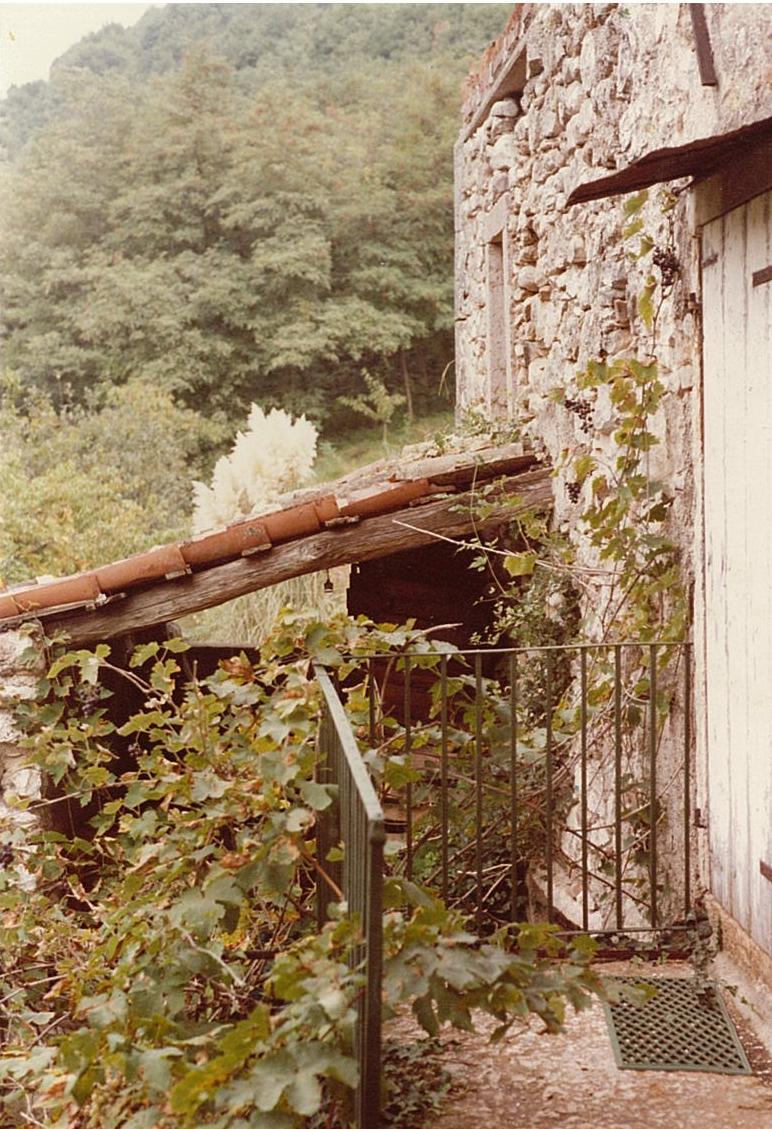
Fittingly, it was in the Veneto that I first tasted this dish of ground cornmeal prepared in the form of porridge. As a relief from apartment life in the centre of Verona I had bought one of ten or so terraced 18th Century case di contadini grouped around an uneven piazza in the Comune of Mezzane di Sotto, a small village located some 30 kilometres north west of Verona. There was a small plot of land behind the house, a field with a kaki (persimmon) tree, some long-neglected vines, a tangle of silver birch and willow along the bank of a narrow torrente. On weekends we would drive out to the house for a day of gardening and daydreaming of what we would do with the house when we had the funds necessary for its restoration. Our weekly journey took us past the village of Mezzane di Sotto, off the metal road that continued on up to Mezzane di Sopra and onto a “strada bianca” or unmade road that wound through orchards of cherry, Houseman’s “loveliest of trees” [i]. In springtime light winds dusted the track with their bloom and we drove through a tunnel of snow.

cherry trees

The strada bianca that brought us to the hamlet rose sharply into the foothills of the Dolomites passing a medieval stone trough, supplied by a constant trickle of cool spring water and once used for washing the community’s bedding and clothing.

fountain

Bordering the hamlet was a torrente, gushing with water from the melted snows at the outset of spring and, in summer, a hot dried bed of white stones overhung with willow and buddleia, teeming with butterflies. In this earthly paradise Antonio, the hamlet’s only permanent resident, hunted all year round with calm disregard for the imposed limits to the seasons and lists of endangered species. Nothing he killed went to waste. The flight and contour feathers of birds were made into dusters, the down into stuffing for cushions and pillows. No part of an entire pig went to waste, and from the ceiling of Antonio’s cellar hung every conceivable type and size of salami while in his shed there were cages of rabbits, wild birds and snails waiting to be served up in a sugo for the nightly polenta. The only animal safe from Antonio’s gun was Stellina, his small, black and white, hyper-active dog that would race down the track to meet and yap at any approaching vehicle.

Antonio, then retired, lived with his wife Adriana and teenage son Andrea, who worked at the local supermarket. Although they lived permanently in the hamlet, the family had no car, no hot water (unless boiled on the wood-fired stove), telephone or indoor toilet. We first met Antonio and his family shortly after we had bought the house. It was while Cristina and I were clearing the garden one warm, Sunday morning that Antonio and Adriana (then in their fifties) appeared from nowhere, scythe and sickle in hand and, without a word, began working alongside us. Later, over bread and cheese and wine, which they had also brought, we were invited to dinner. That evening over a meal of polenta con lumache (snails) we negotiated the exchange of my kaki tree for a cherry tree and began a friendship that would be terminated only by my incessant desire for change.

front door porch

We soon understood that the family ate polenta every evening, Adriana standing, stooped into the fireplace, patiently stirring a cauldron for what seemed hours before pouring the molten porridge onto a wooden board in the shape of a huge ping-pong bat where it was allowed to cool and solidify for a couple of minutes before being cut into serving portions with a length of string. The most popular of the family’s polenta dishes was “con osei” (with sparrows). Cristina was put off by the tiny, brittle feet and beaked skulls that protruded from the polenta, for the birds, plucked and fried, were tossed in and eaten whole. The rest of us crunched away happily. Antonio had his own, unique way of catching the sparrows. Scattering some seed under the kaki tree that sat in the middle of the small yard behind the house, he would stand at the window of the outside toilet and wait until there were a number of birds pecking at the seed when he would release the end of a rope (looped cunningly over the tree’s branches), letting a lampshade fall over the unsuspecting sparrows. After dinner Adriana would scour the polenta pot and then watch the black and white grainy images on their antique television while I would help Antonio manufacture cartridges for the next day’s hunt. One winter evening on a solo visit, I was persuaded to stay overnight. Adriana showed me to my room and pulled back the bedclothes to remove the bed-warmer – a wooden “cage” in which sat a saucepan full of red-hot coals. Pleasantly drowsy after a meal of polenta con coniglio and a bottle of Antonio’s unlabelled Valpolicella, I slipped between the rough, toast-warm sheets, blew out the candle and lay for a while contemplating the cold, starry sky, overcome with a feeling of peace and security. I had been, as I recognized later, experiencing true happiness.

In October of 1986, Antonio and Adriana were at our wedding lunch in Mezzane di Sotto at the Bacco D’Oro. There was Risoules ai carciofi, Tortellini al burro fuso e salvia, Rusteghi alla Selvaggina and Anitra al forno, but no polenta.

Last night I tried to locate our little hamlet at the end of the cherry road using Google’s satellite map but with no success. Perhaps, like Brigadoon, it only appears, briefly, once every hundred years.

[i]
Loveliest of trees, the cherry now
Is hung with bloom along the bough,
And stands about the woodland ride
Wearing white for Eastertide

Now, of my threescore years and ten
Twenty will not come again,
And take from seventy springs a score
It only leaves me fifty more.

And since to look at things in bloom
Fifty springs is little room,
About the woodlands I will go
To see the cherry hung with snow.

From “A Shropshire Lad”
A E Houseman


MECHOUI

In the spring of 1961 many of my fellow foreign students at Grenoble University received letters and phone calls from their worried parents, concerned that their sons and daughters would be caught up in an invasion of France by units of the Foreign Legion and the OAS, (Organisation de l’Armee Secrete) in their attempt to topple the government of Charles de Gaulle and prevent the independence of Algeria. To the French, Algeria was more than just a colony, it was as much a part of the country as Burgundy or Aquitaine and the cry of “Algerie Francaise!” was not only heard from France’s citizens who lived in her favourite colony. In the event, the Generals’ coup failed and the process of independence continued. But the ferocity of the 8 year long war and the massacres perpetrated on both indigenous and French civilians, meant that there would be no home in Algeria for the settlers after independence. Alarmed by the cry of “La valise ou cercueil” (suitcase or coffin), the settlers began seeking safety in France even before independence was finally declared in July of 1962. They were not returning home; many had never stepped foot in France before. Coming from Spain, Malta and other European countries besides France, they had been colonizing Algeria since the country’s annexation in 1834. They were the (relatively) wealthy middle class and called Pieds-Noirs or Blackfeet as the only wearers of boots among a largely sandaled or barefoot people. In 1962 there were approximately one million Pieds-Noirs in Algeria – over 10% of the total population – including 150,000 Sephardic Jews, who had arrived well before the largely Catholic colonists, originally in Roman times and more recently during the Spanish Inquisition. The 900,000 Pieds-Noirs who arrived in France during 1962, considered responsible for the war and loss of colony, encountered resentment and even violence. Many had destroyed their possessions rather than leave them in the hands of the Algerians; all had to adapt to a foreign culture, a strange climate. Many had to learn new ways to earn their livelihood. Madame Pierre Very opened a restaurant near the Place de L’Alma at 44 Rue Jean Goujon and it was there when I returned to France in the early 70s that I first tasted the cuisine of Algeria.

There were many North African restaurants in Paris, from grubby bistros catering to the poor Algerian immigrants clustered around Pigalle’s rue du Gout d’Or to the flashy charm of Charley de Bab el Oued with his “ambiance de Mille et Une Nuits” and his couscous royale, complete with the euphemistically named rognons blancs (rams’ testicles) on the boulevard de Montparnasse. In contrast the discreet, bourgeois décor of Madame Very’s restaurant, le Martin Alma, gave no indication of the provenance of the dishes on offer – Brik a l’Oeuf, Calamars a l’Oranaise, le Turban du Pacha and Madame’s signature dish, le Mechoui de Ghardaia. As the restaurant was a two minute walk from Ernst & Young’s office in the avenue Montaigne, my colleagues and I enjoyed many a mechoui at le Martin Alma, usually preceded by a brik and washed down with the powerful and fruity wines of Sidi Brahim and Mascara, a legacy of Spanish immigrants who had introduced the Carignan grape. By chance, an opportunity to taste a real mechoui was provided by an Ernst &Young client who requested an audit of a pulp and paper mill they were constructing on the Algerian coast near Oran. Joining up at Orly with Michael Morris (1), on loan from the London office, we set out for the coastal town of Mostaganem (2) on what was to be the first of many trips.

The exodus of the Pieds-Noirs had left Algeria without a professional class. Cars, including taxis, ran on near-bald tyres. Chronic overbooking by Air Algerie, coupled with a system that required departing passengers to register their baggage before their person, often resulted in luggage arriving at the destination days before its owner. No shop or restaurant accepted credit cards. The plant was also in trouble. The government, in the expectation that the project would be completed on time, had cancelled all cellulose imports, including toilet paper, from the scheduled date of start-up so that suppliers’ invoices and delivery notes, central to the audit, were no longer in the archival system but pinned to lavatory walls. To reduce costs the government had substituted the normal wastewater re-cycling and incineration systems with a simple pipe which discharged a lethal cocktail of dangerous chemicals directly into the sea, covering the bay as far as the eye could see under a blanket of sludge, depriving the local fisherman of their livelihood and the local restaurants of their fish and crustacean dishes. In spite of the shortages and shortcomings the Algerian people were still in euphoric mode; they had, after all, defeated a major Western power which, at one point had as many as 400,000 troops concentrated against the insurgents of the FLN (Front de L’Armee Nationale). Michael and I were treated with the cordial bonhomie of the victorious and none more so than by Arif, the plant’s Chief Accountant. Mostaganem was not a particularly beautiful town and the hotel had minus stars. But the people had the uncomplicated honesty and charm that the Parisians had lost in the middle ages and there was something in the air, something in the early light when the Muezzin began calling “Come to Prayer, Come to success, Allah is Greatest” from the minarets that made one eager for the day. I could understand why the Pieds-Noirs were so reluctant to leave.

Like most Arab countries the cuisine of Algeria is sheep-shaped and there was little else on offer in Mostaganem’s few restaurants. Strangely, although we dined on spicy lamb sausages (merguez), Shawarma, thinly sliced lamb wrapped in a warm khabz (arab flatbread) and lamb couscous, the mechoui I was looking forward to was conspicuously missing from the menus. But Arif was to change all that when he proposed a trip to see the Roman ruins at Timgad over the coming long weekend. We started off very early in the morning, heading East before the sun was up, well before the faithful were called to prayer, following the Barbary Coast alongside fields of esparto grass, bypassing Alger le Blanc before cutting inland towards Batna. On a plateau, some 40 kilometres from Batna lay Timgad, cunningly devised by the Emperor Trajan in the first century AD to serve both as a retirement home for Parthian (3) veterans of the 111th Augustan Legion of the Roman army and as a bulwark against marauding Berbers. The orderly rows of humble soldiers’ houses, as much as the impressive triumphal arch of Trajan, sent a chilling reminder of the frailty of civilisation. It was also as good an inspiration as any for Shelley’s Ozymandias (4) for Timgad, once in the midst of green fields, was now surrounded by the “lone and level sands” of the Sahara.

On our return, fifty or so kilometres from home, Arif pulled the car off the road and stopped where a few odd-shaped sheep, supervised by a ragbag shepherd, tugged at scattered clumps of coarse grass sprouting amongst the stones. We watched Arif point to a particular sheep, saw it hog-tied and tossed, live and bleating, into the trunk of the car like some unfortunate hostage. “Fat-tailed sheep (5)” said Arif as we drove off, “very good”. Later, as he dropped us at the hotel, he invited us to dinner the next evening.

Arif’s home was a single-storey building of faded pastel stucco, tiled floors and minimal furnishings. The room we were shown into was empty except for 5 or 6 other male guests and a table. The sheep we had seen snatched from the roadside yesterday had been roasted on a spit in the open over the embers of a wood fire, basted with butter, spices and its own fat, and now lay before us in its entirety on the bare table. It was, as it was meant to be, as authentic a reenactment of Abraham’s sacrifice (6) as you could wish. There was no cutlery. Wine was served from a Jerry-can still bearing the markings of the Willys Jeep from which it came. Shortly after the introductions a guest dipped his fingers into the sheep’s body, expertly peeled off a sliver of meat, and popped it into his mouth. Within seconds everyone followed suit. If the concept of “terroir” applies to wine, how much more should it be associated with food? This was nothing like the mechoui on Parisian menus. How could it be when Madame Very’s lamb came from the salt marshes of France and was grilled in joints on the restaurant rotissomat? These special tastes and occasions remain with us forever as unconscious benchmarks, never to be relived. Every subsequent mechoui, in some measure, would fail to please.

Some days later I left Algeria. At the airport women gargled their shrill alalalaalal farewells to their departing men-folk. In the departure lounge girls entered the bathroom veiled and came out dressed in modern, western clothes. In the air I completed the landing card of the Algerian man sitting next to me, leaving blank his date of birth about which he was unsure. Word of my literacy, ownership of a pen and general willingness to help quickly spread through the cabin and before we landed I had completed the cards of half the passengers. Many were young or middle-aged men going to Paris where they would work as refuse collectors, cleaners and Metro workers, living in squalid apartments in Barbes Rochouart, sending the bulk of their thin wages back to their families. In time their sons would become French citizens, live permanently in France and take over the corner epicerie, keeping it open 24 hours a day. In turn the shop owners’ sons would become doctors, business managers and accountants, a new generation of Pieds-Noirs.

1. Michael Morris – aka “Mercury”. Later Lord Morris.

2. Port approximately 80km East of Oran. Founded in the 11th Century, captured in 1516 by Khayrad ad-Din (better known as Barbarossa); under Ottoman rule from the early 18th Century until colonized by the French in 1833. The town now has its own tourism website.

3. Parthia – Roman province in what is now North-Eastern Iran

4. I met a traveler from an antique land
Who said: “Two vast and trunkless legs of stone
Stand in the desert …near them, on the sand,
Half sunk, a shattered visage lies, whose frown,
And wrinkled lip, and sneer of cold command,
Tell that its sculptor well those passions read
Which yet survive, stamped on these lifeless things,
The hand that mocked them, and the heart that fed:
And on the pedestal these words appear:
“My name is Ozymandias, king of kings:
Look on my works, ye mighty, and despair!”
Nothing beside remains. Round the decay
Of that colossal wreck, boundless and bare
The lone and level sands stretch far away.

Ozymandias
Percy Bysshe Shelley

5. Strain of domestic sheep common in North Africa and the Middle East and prized for the fat stored in their prominently large tail and backside. Depicted on pottery and mosaics of the 3rd millennium BC and described in Chapter 3, verses 8, 9 and 10 of Leviticus.

6. Abraham’s sacrifice is celebrated on the 10th day of the last month of the Muslim year during the festival of Eid-el-Kurban, when mechoui is traditionally served. Mechoui is also prepared for festive occasions such as weddings and receiving (special?) dinner guests.

SOLANGE

From early adolescence Paris had always shone out as a beacon of Bohemian freedom and as soon as my Accountancy exams were out of the way I sought and found employment in the City of Light. The Paris of 1970 was a very different town to the present. Mayor Chirac had yet to order the cleaning of the city’s monuments and buildings and Notre Dame was still partially soot laden. The Folies Bergère and the Concert Mayol were still open for business, the market of Les Halles was still in full swing and the Boulevard de Clichy had not yet been turned into a parking lot for coaches from Dusseldorf. On weekend visits to a largely deserted Louvre museum you would have to ask an attendant to switch on the lights. The Marché au Puces at the Porte de Clignancourt and the bouquinistes along the banks of the Seine had not yet been hoovered clean of every worthwhile collectible; a handful of Parisian chefs led by Raymond Oliver were resisting the assault of Nouvelle Cuisine; the globalisation of Ladurée macaroons was not even a twinkle in the proprietor’s eye. Louis Vuitton was just a luggage shop. Was it a better town then? Perhaps. Certainly the marketing of the city as a product and its Disneyfication had not begun in earnest. There were still a few magical years before the girls of St Denis were replaced by pots of geraniums, before the poor were forced out into soul-less suburbs, when butchers still lived with their families over their shops and many quartiers still contained a healthy mix of all levels of society. Perhaps, unless your Hanoi suburb was being carpet-bombed, everywhere, in some respects, was better then. Now I swing between moods of nostalgia, staring into a pool of red wine and listening to the songs of Juliette Greco and Yves Montand and periods when I cannot bear to hear the name of Paris mentioned for the pain of having left it.

My employer was kind enough to put me up at the Hotel de Londres in the Rue Saint Dominique, agreeing to meet the cost of the accommodation for a period of two weeks, during which time I was expected to find myself an apartment. After a brief search I settled on a small “deux pieces” under the eaves of an “immeuble de moyen standing” at 142 Avenue de Versailles. Situated near the entrance to the Exelmans Metro, I was a mere five stops from Alma Marceau, the nearest station to Ernst & Young’s office in the Avenue Montaigne. The building was a fine example of the work of Hector Guimard and naturally attracted many enthusiasts of his flamboyant style of art nouveau, including the over-keen, who would occasionally remove the brass knobs from the apartment doors and saw off parts of the wooden banisters for their collections.

Like all new tenants in a Parisian apartment building, my first responsibility was to register my presence with the concierge. History had already endowed the profession of concierge with a bad name. Guardians of their tenants’ morals, police informers, inquisitive, smiling only at Christmas time in anticipation of a bonus for having protected you for the past twelve months from dirty staircases, ineffectual heating, hawkers, immoral company and rowdy neighbours. It was therefore with trembling hand that I knocked on the door of the loge, which was opened, not by some old harridan, but by a short, plump woman with sad brown eyes that crinkled easily with laughter. I made my introduction, ending it with “Madame….” and trailing off to allow her to give me her name. “Solange” she said, “please call me Solange”.

Solanges do not model for Balmain. They are not the wives of Deputées or steel barons or pretenders to the French throne. Solange is the name of poorer girls from the provinces, of sad heroines in the novels of Emile Zola. Solanges are barmaids and the wives of épiciers. Solanges were concierges long before the Portuguese began to monopolise the profession in the 1970s. According to the folklore of the city, concierges are repellent in their loges, smelling of cabbage, moralistic, suspicious and racist. Solange was none of these. Solange helped me through those early days in Paris, directing me to the best stalls at the weekly market at the Porte de Versailles, explaining how to pick out the sweetest Charentais melons and test the maturity of Camembert, dropping off my shoes at the menders and finding me a plumber in the month of August. One day she invited me to dinner and that same evening I entered her tiny loge and met her husband Jean-Marie and their son, Richard. I felt humbled and amazed. The loge consisted of a small kitchen/dining area, a single bedroom and bathroom. Richard, in his mid-twenties, slept on the kitchen floor.

That was the first of many evenings in Solange’s loge. Dinner was often followed by a game of chess with Jean-Marie. Between moves I learned that the families of both Solange and Jean-Marie were from Charleville-Mezieres, a town on the river Meuse where it snakes through the thickly forested Ardennes mountain range that straddles both Southern Belgium and Northern France. I also learned that Richard was the son of a Polish conscript in the occupying German army. Despised, ostracised by the people of Charleville as a collaborator after the Germans finally retreated behind their own frontiers, Solange was saved by Jean-Marie who married her and took in Richard as his own. But Jean-Marie’s own family turned against him and the family sought the oblivion of Paris where Jean-Marie hid each day inside the blue overalls of the French ouvrier, standing at a lathe in some suburban factory. A well-read communist, he loved to talk about the trade union movement and of his admiration for Orwell and Steinbeck as he paused over his chess pieces. Later he would complain of headaches and our games became fewer and fewer until one day he collapsed in the street, was diagnosed with a brain tumour and died shortly afterwards. But not before he had given me a splendid book on Michelangelo – “pour t’encourager”. I went to the funeral and to watch Jean-Marie buried in the dismal cemetery of Montrouge. There, among the few sad mourners and the bouquets of chrysanthemums was the open coffin and the first dead person I had ever laid eyes upon.

The time came for me to move. Not far, just across the river where the relocation of the old Citroën factory was turning the 15th arrondissement into the new urban paradise. The luxurious new Hotel Nikko was going up on the banks of the Seine and there was a modern shopping mall with cinema complex near the Pont Mirabeau. I had found an apartment in a modern 4 storey building at 6 Rue des Bergers. It was very different from the Guimard building in the Avenue de Versailles. Spacious and modern it came with white Scandinavian furniture that I was obliged to buy, a condition of my acquiring the lease from a Lebanese employee at UNESCO. It was, as far as Solange was concerned,“un appartement de vedette”.

Solange still came to see me and I still went to dinner in her loge where she would serve couscous and tell me about Richard and his on again off again romance with his girlfriend. ‘It is easy,’she would say, ‘to rekindle wood that has already been in the fire.’ And all too suddenly there was another funeral and another trip to miserable Montrouge. This time it was the ill-conceived Richard, the moon-faced, blue-eyed son of a Polish soldier who had self-destructed before the age of thirty. Soon after that Solange moved too, and I went to see her in a bigger, grander building close to the Porte Dauphine. But I left it too long between visits and then she too was gone. Not dead. Not then. Perhaps back to Charleville, perhaps to another loge. Now all the concierges have gone, even the Portuguese, replaced by interphones and closed circuit television.


Abelard & Eloise

One of France’s prettiest rivers, the Sevre, has its source near the village of Secondigny, which lies in Poitou-Charente in the South West of the country. As the stream widens into a river and winds North, passing through La Vendee, it gathers speed as it descends in altitude until it gushes into the Loire just South of the city of Nantes. The Sevre runs with such speed on its last leg into the Loire that, in the past, many built water mills along its banks, bringing prosperity from the tanning of leather and the weaving and dying of wool. With the tanners and weavers came the hoopers of barrels, criers of onions, carriers of faggots, scummers of pots and all the other flotsam and jetsam, including the thieves and slipshod cafards that feed on the success of others. Today the river is tranquil, a destination for the quieter kind of tourist seeking those last outposts of France’s august, provincial cuisine and the tangible remnants of the region’s ancient history.

Long before France was united under a common crown, the Sevre was already busy and important, the confluence of the independently ruled lands of Brittany, Poitou and Anjou. Then, all Europe was no more than a collection of private fiefdoms and even where claims of Kingship existed, actual rule depended upon the allegiance of the nobility, many of whom were tied only by that flimsiest of knots, marriage. In 1137, Louis VII, King of the Franks, having acquired Aquitaine by wedding its Duchess, Eleanor, promptly lost it after the marriage was annulled. Only two years after being cast aside for failure to produce a son, Eleanor married Louis’ rival, Henry II, King of England, gifting Henry the Duchy of Aquitaine and providing him with the male heirs that would continue their father’s struggle against Louis.

Ever changing alliances, the making and breaking of marriages and the resulting territorial claims, immersed Europe in constant warfare. And so it was that in 1076 the Duchy of Brittany, then ruled by Hoel of Cornouaille was invaded by the forces of Duke William II of Normandy, who doubled as King William I of England. Among the barons loyal to Hoel who helped repel the Anglo-Norman invasion was Daniel, Lord of Le Pallet. Daniel’s castle, of which only the ruined keep now remains, dominated Le Pallet, a village on the banks of the fast-flowing Sevre, only 10 miles south of Nantes.

Lord Daniel’s daughter, Lucie, was married to her father’s chief knight and garrison commander, Berengar, and in 1079 she bore him their first child. It was a boy and they called him Peter, later to be known as Peter Abelard. More children followed – Rudalt, Porcar, Dagobert and finally, a daughter, Denise. Abelard and his siblings had the good fortune to be born, in this most class-conscious of times, outside the yolk of serfdom and to parents that encouraged learning. But while his brothers were drawn towards the military and religious life customary for their class, Abelard pursued academe. He was not, and never would be, one to ‘dance the brangle gay in fits of dalliance’. Curious, obsessed with learning, he was oblivious to the normal customs and pleasantries of youth and probably friendless, for he had no space in his life for anything other than his passion for knowledge. At seven he was at the Cathedral school of Notre Dame; at eleven he was reading Ovid, Virgil, Juvenal, Aristotle, Seneca and Cicero, pagan literature that would later separate him from the Church he was to turn to, for in the12th Century it was the Church that dictated the subject matter for philosophical thought and academe and it was in the precincts of cathedrals that the first universities began. The great scholars of the age were wanderers, and their students followed them. In1093 we find Abelard at Loches, in Anjou, listening to Roscelin; in 1100 he is in Paris, being taught by William of Champeaux. In 1101 he became a teacher himself, conducting lectures at Melun and then in Corbeil. Teaching in Abelard’s day was a more harrowing occupation than now. It was not a presentation of a prepared lecture to a room full of respectful, note-taking students, but a disputation, an intense argument between teacher and audience, often revolving around obscure points of logic. By 1105 Peter was burnt out and recovering from a breakdown with his family in Le Pallet.

The Brittany that he returned to was now ruled by Hoel’s heir, Alan IV and the conflict with Normandy had been temporarily halted by Alan’s marriage to Duke William’s daughter, Constance, who, proving an unpopular choice, was promptly poisoned and replaced by Ermengarde of Anjou. The truce with Normandy was over, but Alan had a new ally in Ermengarde’s father, Fulk, Count of Anjou, ruler of that land of angels and unicorns. Overseas, more important conflicts were taking place. In 1085, after years of freedom of worship, three thousand Christian clergy and pilgrims were massacred in Jerusalem, their churches turned into stables and mangers. Ten years later, to Peter the Hermit’s rallying cry of ‘God wills it’, and with the support of Pope Urban II, the People’s Crusade, set out to reclaim the Holy Land, only to be slaughtered by the Turks in Anatolia. A more professional army was raised and in 1099 Jerusalem finally fell to the Crusaders under Raymond of Toulouse.

When recovered and refreshed and after renouncing his inheritance in favour of the eldest son of his brother Dagobert, Abelard returned to Paris and resumed his studies under William of Champeaux. Soon Abelard’s own reputation as philosopher and master of logic was as great as that of his teacher, his fame as a scholar spreading across Europe. Abelard’s teachings, inclined towards the exultation of human reason and rational thought, were often in conflict with the rule of the book that dictated Christian theology. For each student who marveled at his logic and independent spirit there was a prelate who saw him as a fomentor of dispute and division and a heretic.

At 34, after a life devoted to scholarship and at a point where his popularity and reputation were at their height, Abelard allowed his gaze to fall upon Eloise Garlande, the niece and ward of Fulbert, a Canon of Notre Dame. ‘He came to love late’ writes Helen Wadell, ‘fastidiousness and a white heat of the intellect had kept him chaste, and he had small interest in lay society.’[i] Accepting Abelard’s request to rent lodgings in his house in the Rue des Chantres, Fulbert asked if he would oblige him by instructing his ward, effectively ensuring her seduction. In the homosocial society that existed in 12th Century Europe, women were perceived as potentially evil and socially and intellectually inferior to men, the concept stemming from Genesis and Eve’s surrender to temptation. Mental inferiority also translated from assumed physical inferiority, women’s genitalia being perceived as an inverted penis. Galen’s medicinal theories also affected women’s lives, their diet determined by their ‘cold and wet’ humours, which also made them more earthly and correspondingly less spiritual.

This view of womanhood, supported by the Church, naturally impacted on all aspects of life, from family to government. With the Virgin Mary as a role model, women were required to remain chaste in a world where sexuality and honour were closely linked. A dowry system restricted their freedom, while married women were expected to confine themselves to household roles where they were subservient in all respects to their husbands. The appointment of a tutor to a woman, in these circumstances, was therefore quite radical and almost certainly propelled by Fulbert’s desire to glory from the cachet of employing so famous a teacher.

But Eloise, at 23 some ten years younger than Abelard, was an exceptional woman, the Hypatia of her day, highly literate, eager for knowledge and an independent spirit. It was, Abelard tells us, Eloise’s gift for learning as much as her beauty that set him on fire. Shared culture illuminates romantic liaisons. What Eloise saw in Abelard we cannot know. We do not see our fellow men through the eyes of a woman. We cannot see what a woman sees, some quality in a man that other men may see as a fault or perhaps a defect that, for some reason, a woman finds desirable. But the apple had been picked and the invisible worm released into the night.

For a while the affair was conducted in secret, the tutorials abandoned. ‘My hands’ reports Abelard, ‘wandered more to her breasts than our books’.[ii] Absorbed by his passion, Abelard neglected his other students, turning his talents to writing love songs of such elegance they soon found a wide audience. Despite their popularity no existing love song from the period has ever been identified as penned by Abelard. In 1803 more than 250 poems, mainly from the 11th and 12th Centuries and written in medieval Latin, were discovered in a Benedictine monastery in Beuern, Bavaria. These ‘Songs of Beuern’ or Carmina Burana, contain many poems of unknown authorship; Helen Wadell wonders whether Abelard’s work could be among them.

Take thou this rose
Since love’s own flower it is,
And by that rose
Thy lover captive is.

Inevitably, the affair was discovered and the licenciate lodger expelled. Abelard likens the exposure to Ovid’s story of Vulcan finding Mars in bed with his wife, Venus. But Mars and Venus were Gods and did not experience the shame of discovery and the pain of being apart that the human lovers suffered. Shortly after the separation Eloise sent word that she was pregnant. Waiting until Fulbert was away, Abelard stole Eloise away and took her to Le Pallet where she stayed with Abelard’s sister, Denise, until she gave birth to a boy. They called him Astrolabe, the name for a navigational instrument developed in the period of classical antiquity; today they would have called him SAT-NAV. Rather than wait for the punishment he anticipated, Abelard returned to Paris, begged Fulbert’s forgiveness and undertook to marry his niece, specifying one condition, that the marriage be kept secret, for marriage would effectively bar Abelard from a career in the church, the only career path for an intellectual at that time. With Fulbert’s agreement, Abelard returned to Le Pallet to make Eloise his wife, only to be rejected. Eloise argued that it would be a constant risk to Abelard’s advancement in the Church, that it would end in his disgrace and that it would not, ultimately, appease her uncle. She believed, as Cicero believed, that marriage was a bar to the pursuit of serious art or thought, a condition now known as ‘the pram in the hallway’ syndrome.[iii] Finally, and radically for the times, she preferred the role of concubine. ‘The name of wife may have the advantages of sanctity and safety, but to me the sweeter name will always be lover or, if your dignity can bear it, concubine or whore.’[iv] But finally Eloise reluctantly capitulated and the couple returned to Paris where they were married.

Within a very short time Fulbert’s anger had bubbled to the surface again and he began spitefully spreading news of the secret marriage. Alarmed, Abelard placed Eloise, for protection, in a convent in Argenteuil. Thinking this was a ruse by Abelard to hide his wife behind a veil and free himself from the embarrassment of marriage, Fulbert took action, sending a group of kinsmen and servants to Abelard’s lodging one night where they removed all possibility of any further physical intimacy between his niece and her husband. False hearts are easily won over. For a few coins Abelard’s own servant aided the band, joining the long list of vermin (headed by Judas Escariot) who betrayed their masters. The castration of Abelard echoes the fate mythology ascribes to Uranus, but the circumstances were quite different. Uranus, born from Chaos, lived in fear of his own sons, convinced that they would challenge his authority and eventually overthrow him. In a moment of rage he incarcerated some of his younger children in Tartarus, causing his wife Gaia such grief that she asked her sons to castrate their father. Only Cronus stepped up to take the sickle his mother had fashioned for the occasion. The blood that flowed from this castration caused Gaia to give birth to the Gigantes, the Erinyes and the Meliae.[v] The genitals, flung by Cronus into the sea, were whipped by the waves into a white foam, from which, when it reached a sandy shore, stepped Aphrodite, Goddess of Love, Incarnation of Beauty. In contrast, Abelard’s castration was a pitiful, human affair. Nor was it the end of his misfortunes.

Meanwhile, much had been happening in the real world. Henry I, whose mother was Matilda of Flanders, was now King of England. Henry married Matilda of Scotland and their son, William Adelin, married Matilda, daughter of Fulk of Anjou, a surfeit of Matildas destined to confuse later historians of the period. Leaving his son, Conan the Fat (no relation to Conan the Barbarian) to rule Brittany, Alan IV entered the Monastery of Redon followed dutifully by Berengar and Lucie, so creating the first retirement home. Louis VI (also ‘the Fat’) ruled as King of the Franks. In the Holy Land, Hughes de Payen had created an order of warrior monks for the protection of Jerusalem bound pilgrims, the Poor Fellow Soldiers of Christ and the Temple of Solomon or, as they are more widely known, the Knight Templars. In an early form of travellers’ cheques, pilgrims could deposit cash and chattels with the Templars’ agents in France against promissory notes redeemable in the Holy Land. More importantly for Abelard, in 1113 a young Burgundian noble, known to history as Bernard of Clairveaux, was admitted into the Cistercian Order. Clever, a diplomat in capouch and caligas, determined to stamp out any slackness in the ranks and to restore the rules of St Benedict to the letter, he was the natural enemy of any liberal minded Christian attempting to re-interpret the established views of the scriptures.

Once healed, Abelard withdrew to the Monastery of St Denis, the family scattered; Astrolabe staying in the care of Abelard’s sister in Le Pallet and Eloise remaining a nun in the convent at Argenteuil. Paris in the 12th century was not entirely lawless. Canon Fulbert was expelled from Notre Dame and deprived of all he owned (although the punishment was rescinded two years later). Two of Abelard’s assailants, his disloyal servant and a kinsman of Fulbert, were castrated and blinded. Abelard entered the monastic order of St Benedict, throwing himself into theology with the same passion he had felt for Eloise, but he was now cloistered with his spiritual opponents, a Church hierarchy jealous of his fame, angered at the number of students coming to sit at his feet. Casting around for means to destroy him the Bishops denounced his thesis ‘On the Unity and Trinity of God’ as heretical. Abelard was ordered to face accusations of heresy before a Synod held in Soissons in 1121. Frustrated by the scholarship and rational arguments of the accused, the Bishops and Papal Legate sitting in judgement resorted to threats, forcing Abelard to publicly burn his thesis. Logic, as he would later write, had made him hated by the world. Humiliated, he sought solitude in a remote area in the North East of France, near the city of Troyes, where he fashioned a Benedictine Monastery from sticks and rushes. He called it the Paraclete,[vi] Solitude was short lived; before long students started drifting in from far and wide to sit at the feet of their master. News of the growing number of pilgrims only further incensed his enemies in the Church. The poisoned chalice took the form of promotion. Chosen as the Abbott of Saint Gildas de Rhuys, Abelard found himself back in Brittany. The Abbey was situated near Vannes on a desolate part of the ragged Breton coastline, blasted by those salt winds that still twist trees of the littoral into grotesque shapes and send them leaning away from the sea, straining against their roots. The climate was no more pleasant inside the Abbey, for the monks were crude and uneducated, mumbling their devotion in native Breton patois. They also took a dislike to Abelard, who endured the misery by writing a history of his torments. The resulting Historia Calamitatum prompted Eloise to write her first letter, a moving outpouring of love, but at the last, asking if it would not be better for Abelard to summon her to God as he once summoned her to his bed. When Abbot Sugur placed the Convent of Argenteuil under the management of St Denis, expelling Eloise and her fellow nuns, Abelard gifted them the deserted Oratory of the Paraclete, now built solidly of wood and stone.

Finally Abelard was given permission to return to Paris, maintaining the rank of Abbott. He chose to teach at the Montagne Sainte Genevieve, where he had earlier established a school. Students flocked to hear Abelard. The area (in Paris’ 5th Arrondissement) remains to this day the cultural and social centre for students of the Sorbonne. Abelard, while remaining a devout Christian, continued with his controversial approach to theology. But he would not be allowed to rock the boat much longer, for many believed that it was the rules of St Benedict and the general acceptance of established Church doctrine that were responsible for maintaining the largely stable society that existed at the time.

While Abelard had been suffering in Brittany, Bernard of Clairvaux’s reputation grew. At the Council of Troyes in 1129 he obtained formal recognition of the Knights Templar as a new monastic Order, which he later eulogized in ‘In praise of the New Knighthood’, a document that would become influential in the development of chivalric ideals. In the following year when the Church had to face the embarrassment of having two rival Popes, Innocent II and Anacletus II, it was Bernard they chose to sort out the so-called ‘Schism’. He was the ideal champion to end Abelard’s controversial teachings and when William of St Thierry accused the latter of heresy, Bernard denounced Abelard to the Papal authorities. Possibly regretting his earlier capitulation, Abelard challenged Bernard to open debate. Wary of confronting such a formidable logician, Bernard declined until Abelard began publicizing the challenge so forcing the former to accept. On the eve of the debate set for June 1142, Bernard presented the Bishops with a list of Abelard’s heresies, asking them to condemn each one. There was no debate – Abelard had been judged before he appeared before the Council the next day. Humbled and excommunicated, Abelard found sanctuary in the Benedictine Abbey of Cluny under the protection of Peter the Venerable who succeeded in lifting the sentence of excommunication. Abelard spent his few remaining years in the Priory of St Marcel.

Scholars from Classical Antiquity through to the Middle Ages were divided on the subject of love, unsure whether it was the brain or the heart that triggered these irrational impulses. Aristotle considered that all mental activity took place in the heart, the brain being a secondary organ, a sensus communus, where all spirits come together. The Islamic philosopher, Avicenna, born at the end of the 10th century, believed that emotional outcomes were determined by the shape of the heart, type of blood and the dominance of one of the four bodily ‘humours’ (hot, cold, moist and dry). The Greek physician, Galen of Pergamon, writing in the first century of the Common Era, was correct in thinking that mental activity took place in the brain rather than the heart but quite wrong in believing the brain to be cold, moist and composed of sperm. Today we would say that Abelard was a hot-head with his brain in his trousers. For a rich language English is surprisingly poor when it comes to describing love: Love sensual, love spiritual, love brotherly, it’s all just love. The Greeks had specific, single words that clearly defined the type of love in question; they would have described the love Abelard first felt for Eloise as eros (romance) and his feelings after emasculation as storge (affection). From her letters it seems clear that Eloise, from the first encounter with Abelard to her death, experienced agape, the all-consuming, selfless, unconditional love that made hers the most famous love affair in history.

When Abelard died in 1142 at the age of 63, he was buried at the Priory of St Marcel, near Chalon-sur-Saone, before being moved, secretly, to the Paraclete where Eloise continued as Abbess and tended his grave until she was laid next to him in 1164. True fame requires the lasting attention of poets; Abelard and Eloise are remembered by Jean de Meung, Jean-Jacques Rousseau, Alexander Pope and Robert Lowell.[vii] The couple lie, or are at least remembered, in the cemetery of Pere Lachaise in Paris, a Gothic shrine to eternal love, surrounded by Oscar Wilde, Jim Morrison, Chopin, Bizet, Rossini, Moliere and Modigliani. Bernard, canonized in 1174, lies alone, still revered in many quarters but unsung by poets, in the Cathedral at Troyes.


[i] The Wandering Scholars; Helen Waddell; London, Constable, 1927; p195

[ii] Abelard & Heloise, The Letters and Other Writings; William Levitan, Indianapolis; Hackett, 2007; p12

[iii] ‘There is no more sombre enemy of good art than the pram in the hall.’ Cyril Connolly, English critic and writer

[iv] Abelard & Heloise, The Letters and Other Writings; William Levitan, Indianapolis; Hackett, 2007; P55

[v] The Giants, The Furies and the Nymphs of the Mountain Ash

[vi] No trace of the Paraclete remains although it continued as an Abbey for close on 600 years until its dissolution in 1792.

[vii] Roman de La Rose; 1275 allegorical poem on the subject of courtly love by Jean de Meung
Julie, or the New Heloise; 1761 epistolary novel by Jean-Jacques Rousseau
Eloisa to Abelard; 1717 poem by English poet Alexander Pope
Eloise & Abelard; 1973 poem by American poet Robert Lowell

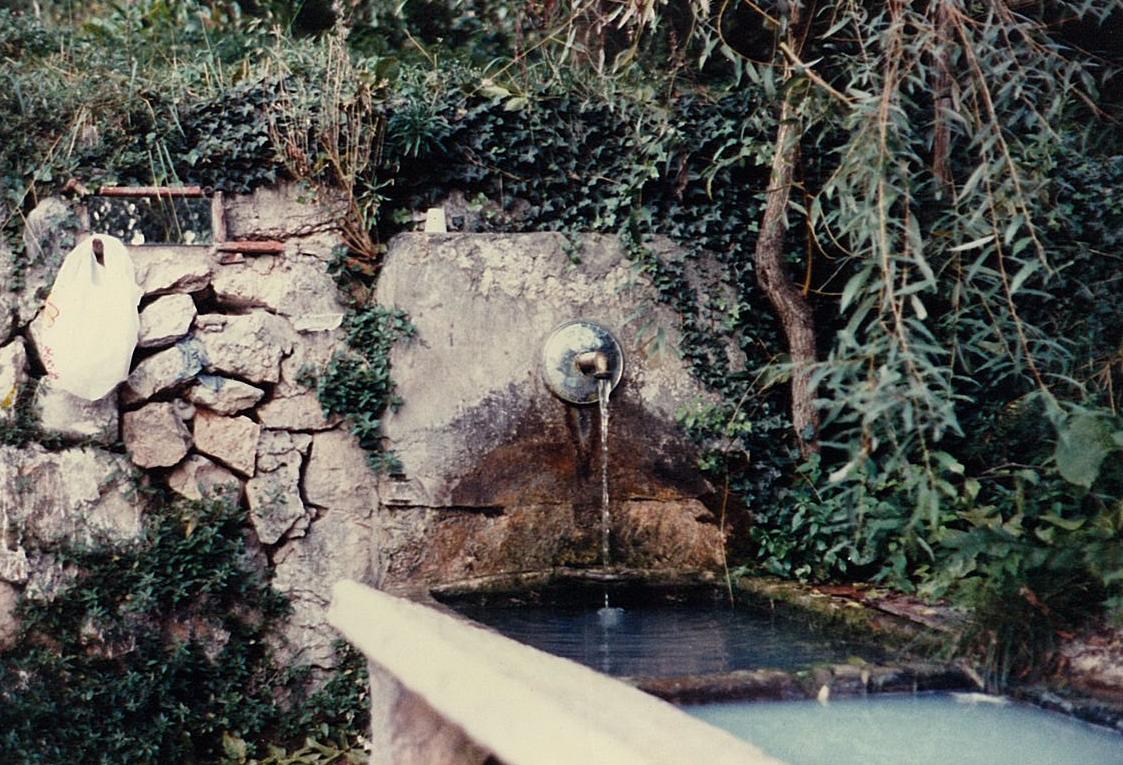
 

The Envelope

I’m looking at this photograph of Edward Lynn, my father’s younger and only brother. He has short, blonde hair, and pale eyes and a long-stemmed pipe clenched between his teeth. He reminds me a little of Jacques Tati. He’s wearing a black jacket and striped trousers, morning wear for the better off, working wear if you were a shop assistant at Harrods. But Uncle Ted has Aunt Gladys on his arm and she’s wearing a cloche hat, coat with fur-trimmed collar, white stockings and buckled shoes and so I’m guessing that Ted is wearing morning dress for his marriage. The writing on the back of the photo tells me it was taken in 1931 at Cliftonville, a seaside town in Kent. Ted would have been 24 years old at the time and employed with his elder brother in his father’s timber yard in Rye Lane, Peckham, the strategic future of which was set out in its corporate name, W Lynn & Sons. Today it would have been called Timberco with an exit strategy for the family decided upon well before the company’s formation. Eleven years after this photograph was taken and only one year after I was born Uncle Ted died at the hands of the Japanese in South East Asia and so I never knew him, or at least, not until I opened the envelope.           Image

I was familiar with the envelope since my very early years. It rested in the drawer of my father’s tallboy along with a Webley pistol, a Rolls razor, some golf balls, a selection of coloured, wooden tees and silver medals from Alleyns School with my father’s name inscribed as the 1919 winner of the long jump and the mile. I suppose that all those times that I stood on a chair to look at the contents of this exciting cache I was chiefly attracted by the pistol and although the envelope was unusual with its crown seal and crossed bands of black, its contents – three stained and creased photographs, a letter and several pages of tiny, densely packed script – were uninteresting to a small boy. It was many years later, long after the death of my father, that I came into contact with the envelope once more and understood, for the first time, that its contents were the last personal belongings of the uncle I had never seen.

Soon after this rediscovery I gave the envelope to my sister. She and her husband had been on a holiday in Thailand and, on a visit to the River Kwai, had stumbled, by chance, upon our uncle’s grave in Kanchanaburi War Cemetery. It was her present to me of a photograph of Ted’s tomb – a polished marble plinth in the shape of a console – that made me remember the envelope, and I gave it to her to with the feeling that it may add meaning and interest to her recent experience. But I recall thinking at the time that it was strange, definitely unfortunate and perhaps even shameful that the envelope had never ended, as it should have, in the hands of my uncle’s widow or her two daughters.

Image

Now, 20 years later I have the envelope again. The three photographs are still there – a picture of Aunt Gladys with her two daughters, blonde Maureen and her darker, taller sister Audrey, walking along the front at Brighton, the pier clearly recognizable in the background, the girls with their buckets and spades, Madeleine clutching a Union flag. Another is of the two girls in the garden of grandfather’s house at Rottingdean; the last is of my father as a reserve officer in the Home Guard. Now I have time to examine the diary, evidently begun after his capture by the Japanese but beginning with the detailed events of an uneventful voyage from England to Singapore. There is no record of his capture, no reflections on his state of mind or descriptions of his Japanese guards, no mention of his wife or children. His dangerous and eventually fateful experiences evidently did not generate the poetic muse as they did for some.

When Signalman Thomas Edward Lynn marched out from Catterick Camp with the rest of 2nd Company Royal Signals on Monday, July 27 1941 Britain had already been at war for nearly two years. “There was much speculation about our destination” writes Ted. There was talk of the possibility of an occupation of the Azores and Canary Islands and of various destinations in North Africa, the Middle and Far East; it was, after all, a World War. The first leg of the journey to an unknown destination was a march of a few miles to the station at Richmond and then, by train, first to York and then to Liverpool where they embarked on the Stirling Castle. The 25,000 ton former passenger ship, equipped to transport 6,000 troops was only carrying 1,700 soldiers and airmen and so Ted and his friend Jack found themselves in relative comfort, sharing a cabin on E (top) deck. During the evening of August 2nd, after a brief stop in the Clyde estuary, convoy WS10, consisting of 19 merchantmen and an escort of 17 destroyers, slipped into the Irish Sea and headed south. Early the next morning Ted is on deck experiencing the departing soldier’s nostalgia for the vanishing landscape of his native land. He notes the names of some of the other ships – Andes, Strathallen, Windsor Castle, Vollendam. Two weeks later the convoy arrived at Freetown, the only incident during the voyage a collision in fog between the Windsor Castle and Warwick Castle. Ted records watching the locals diving for small change as if he were on a Cooks Tour. There was no shore leave and after four days the convoy turned south again, this time unescorted, reaching Cape Town on September 9th. To Ted it looked “like a place that you see in the films”. This time there was shore leave and Ted remembers 3 trips to the pictures and the hospitality of the locals who invited the soldiers into their homes and took them on sightseeing trips to Table Mountain. The convoy, now reduced by the dispersal of some ships to other South African ports, resumed its journey on September 13th, this time protected by the armed merchantman Carnarvon Castle. On September 20th the convoy entered Bombay and after a brief stay the Stirling Castle continued alone berthing finally, on September 30th in Singapore’s Kepple Harbour where the 120 men of C Company were taken by lorry to Alexandra Barracks on the outskirts of Singapore city. At this point the narrative part of Ted’s diary ends.

On December 8th the Japanese, desperately short of raw materials to fuel their invasion of China after the USA’s embargo on exports, set about the conquest of Britain’s rubber rich Malayan colony and the emasculation of American naval power in the Pacific. In lightening fast attacks on British airfields on the Malayan peninsula, all the allied front line planes were lost, exposing the battleship Prince of Wales and the cruiser Repulse to Japanese torpedo bombers which sent them both to the bottom of the South China Sea as they attempted to stop the enemy landings on the Eastern coast of Malaya.

On December 23rd, as the Japanese under the command of General Tomoyuki Yamashita completed their invasion of the Malayan peninsula and pushed South, Ted wrote to his brother and sister-in-law enquiring after my birth, encouraging my father to stay out of the war and hoping that ‘this muddle’ (WW2) will be over soon.

Image

Kuala Lumpur fell January 11th and on the last day of the month the British withdrew across the Causeway, demolishing it behind them.

Singapore, with its garrison of 80,000 British, Australian and Indian troops, was not expected to fall to the Japanese and it was partly this complacency that ensured that it did. There were, of course, other factors – lack of air cover, guns facing the sea from which any invasion was confidently expected to come, incompetent commanders and a more determined enemy. The allied soldiers were also shocked by the ferocity of their opponents, operating with complete disregard to international rules of war and under orders to take no prisoners. The Japanese also had a frightening obsession with sharp instruments. In 1941 British officers carried a swagger stick, their Japanese counterparts a Samurai sword. Even now the classy Japanese suicide option is ritual disembowelment with tanto or wakizashi rather than the noose, overdose or gas oven. World War 2 footage of Japanese soldiers shows an army with permanently fixed bayonets. To kill someone with the bayonet (especially with the 20 inch long blade of the Type 30 model) was infinitely more satisfying than a bullet to the brain. It was slower, more intimate, more personal, it hinted of ancient Samurai martial arts and it gratified the need to inflict pain. And so it was that on February 14th when the invaders arrived at the Alexandra Barracks Hospital and were met by a British Lieutenant carrying a white flag he was casually dispatched by bayonet. Over the next two days all but 5 of the patients and medical staff of the hospital were similarly put to the sword.

Ted does not record how he was rounded up after the formal surrender the next day, only that on February 17th he marched with other prisoners the 16 miles to Changi, where the British barracks had now been converted to their prison. Ted found himself in the Selarang Barracks. Not all of the Allied soldiers went to captivity; 30,000 of the 40,000 Indian personnel elected to join the Indian National Army and fight for the Japanese.

British soldiers don’t have the same attitude to capture and imprisonment as the Japanese. The British join life drawing classes, form clubs to study the local insect life and present pantomime shows for fellow prisoners and enemy guards alike. The Japanese prefer suicide. My housemaster at Cranleigh School, Captain Lovell H Garrett, completed a thesis for his Oxford history degree while languishing as a prisoner of war in Colditz Castle. The British also like to escape and begin tunneling as soon as they’re incarcerated. And so it was inevitable, notwithstanding the fact that Singapore was an island and that swamps, dense jungle and a bloodthirsty enemy stood between the POWs and liberty, that some would try. On August 30th two British and two Australian soldiers attempted the impossible and were quickly recaptured. General Shimpei Fukuye immediately ordered all 17,000 allied prisoners of war onto the parade ground of the Selarang Barracks (an area of 128 x 210 metres) where each prisoner was required to sign a pledge that he would not attempt to escape. In the face of almost unanimous refusal General Fukuye applied pressure, first by ordering the escapers to be executed by a firing squad of soldiers of the Indian National Army and then by forcing the prisoners to stand, unfed in the heat and filth of the compound. On September 4th, after dysentery broke out and the sick began dying, Lt. General Holmes, in charge of the allied prisoners, ordered the pledge signed. Most signed with absurd or fake names. Ted merely records “Signed parole. Forced into it. Some funny business somewhere.”

In the autumn of 1942 Ted notes the arrival of Red Cross parcels (flour, ghee, sugar, jam, dried soup and fags) and pay reductions from 15 to 10 cents per day. During this time the Japanese were busy shipping the allied prisoners to Japan and other parts of Asia to be used as slave labour. Ted’s turn arrived on 15th October. There was no respite even though he writes that he had reported sick a week earlier. “Left Singapore. 4 days on train. Arrived Bangkok early Sunday morning. Left Tuesday; walked 15 miles. Walked another 15 Wednesday. Rest Thursday.” Ted died on January 2nd 1943 a little over 2 months after joining the teams of forced labour working on the infamous death railway, just one of the tens of thousands who succumbed to dysentery, malaria, starvation and the Type 30 bayonet. As the famous bridge over the Khwae Yai River was completed only one month after Ted’s death, we can assume that his last days were spent near or on that section of the 400 km long railway.

In spite of the slaughter unleashed by Little Boy and Fat Man it took the prospect of fighting the Russians and a series of ritual suicides by his military commanders to convince Emperor Hirohito to agree to the terms of the Potsdam Declaration. The Japanese would later renounce any form of nuclear armament and for many years limit any aggression outside of their borders to the world’s whale population and to the export of gruesomely explicit martial arts cartoons.

In 1971, during a state visit to England, Emperor Hirohito, in a morning suit similar to Ted’s wedding outfit, was taken by open carriage to visit the London Zoo (he was a keen amateur botanist). Wherever he went, he was greeted by silent crowds. “We cannot pretend” said the Queen in front of the unexpressive face of her guest, “that the past did not exist.” Not all escaped retribution. General Fukuye was shot in Selarang Barracks after being found guilty at the Singapore War Crimes Trial in 1946. General Yamashita was hanged by the American military in the Philippines in the same year.

It seems odd that Changi, once the location of an infamous prison, is now the site of a modern airport, that the island of Singapore, 70 years ago a key fortress in a world empire, is now a hub of Asian technology and political correctness and that the children of those Japanese who bayoneted helpless patients in the Alexandra Barracks Hospital, or even Signalman Lynn for that matter, may be now calmly photographing each other in front of Sydney’s Opera House.

DE RERUM NATURA

Some 300 years before Christ was even a twinkle in God’s eye, Epicurus, a Greek philosopher from the island of Samos, was writing about Particle and Quantum Physics. What he concluded and taught was that the universe, which he declared to be infinite and eternal, contains nothing except atoms and void. Atoms, freewheeling endlessly and randomly in the void, clashing and uniting, form everything of matter in the universe from a turnip to Kim Jong-Un’s (will there be a Kim Jong-Deux?) underpants, from Lady Gaga to the planet Saturn. Pre-dating Darwin by more than two thousand years, Epicurus believed that matter, whether animal, vegetable or mineral, would adapt over time to the challenges faced so that only the hardiest survived, a process of natural selection. The presence of only atoms and void naturally leaves no room for the supernatural, effectively consigning ghosts, souls and Gods to the realms of fantasy. Neither Earth nor its human inhabitants are the centre of the universe, he claimed, and when we die the atoms that combined to make us will merely redeploy. Our lives need be free of all anxiety about the afterlife, of wondering whether we shall roast in Hellfire or be reunited with loved ones for there is no afterlife. He equated moral good and evil with physical pleasure and pain and therefore one should strive for a life of peace and tranquility, free of the fear of death and the eternal damnation that, at the whims of the gods, may follow. There is no awareness in death and so we have no reason to fear it.

Much of what Epicurus taught was naturally anathema to the Christian Church because of the heretical beliefs inherent in the philosopher’s doctrine. For its first fifteen hundred years, the Church enjoyed its own pain, (self-flagellation in sympathy with Christ’s Passion) and the pain of others (immolating heretics), further removing it from the teachings of Epicurus. To counter the Epicureans the Church rubbished their philosophy, misrepresenting it as a simple desire for pleasure-seeking and over-indulgence (a belief still held by many today) when these were specifically condemned by Epicurus who believed excess eventually causes pain.

In the last century BC a Roman poet and philosopher, Titus Lucretius Carus, published the ideas of Epicurus in the form of an elegant poem he called ‘De Rerum Natura’ (‘On the Nature of Things’). Copies of this work, destroyed by Christians, eaten by worms, overwritten by vellum hungry Monks, were hard to find by the 15th Century and it was the detective work of Florentine writer and humanist Gian Francesco Poggio Bracciolini that unearthed one of the few surviving copies in a remote German monastery in the early years of that century. Poggio copied the text and sent it back to Florence where other copies were made, finding their way into the hands of humanists and influencing, among others, Botticelli, and determining the course of the Renaissance. Accelerated by the advent of the printing press, copies of De Rerum Natura eventually ended up in the libraries of many of Western Europe’s great thinkers including Sir Thomas More, Francis Bacon, Montaigne and Newton. It is thanks to Thomas Jefferson, a self-avowed Epicurean, that the Declaration of Independence includes ‘the pursuit of happiness’ as one of Man’s unalienable rights.

This true story, so much more exciting than anything Dan Brown has ever written, is the subject of Harvard Professor, Stephen Greeblatt’s book ‘The Swerve – How the Renaissance Began’ (London, The Bodley Head, 2011). Splendid stuff!

If you come upon a tomb with the inscription Non fui, fui, non sum, non curo (I was not; I was; I am not; I do not care) you will know an Epicurean lies there. I shall have no such epitaph, even though I agree with its sentiments, for I intend that my own personal assembly of atoms shall be consumed by fire. As Woody Allen once said ‘I don’t believe in the afterlife, but I’ll take a clean change of undies, just in case.’